How to Store Bed Linens: Sheets, Blankets and Spare Pillows
How many sheet sets to keep, how to bundle each set so it stays together, a simple fitted-sheet fold, and where sheets, blankets, duvets and spare pillows can live without a linen closet.
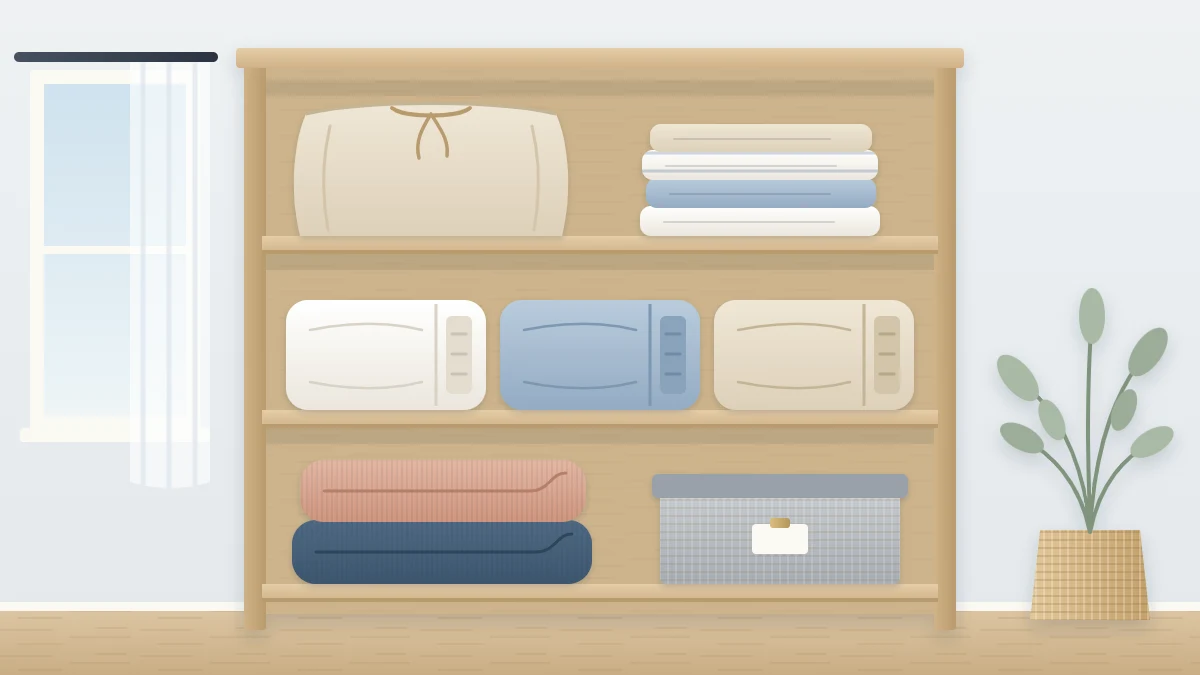
Bed linens are bulky, slippery to fold and rarely have a place of their own, so sheets, duvet covers and blankets get pushed into whatever gap will take them. Then making the bed starts with a search for a matching pillowcase.
Working out how to store bed linens comes down to three decisions: how much to keep, how to keep each set together, and where the sets and the bulkier layers will live. None of it needs a linen closet. A drawer, a shelf, a bench or the space under the bed will do.
Decide how much to keep
Storage gets much easier when there is less to store. Count the sheet sets you own for each bed, then compare that with how you do laundry.
Two or three sets per bed is a common working number: one on the bed, one in the wash or drying, and perhaps one spare. Treat that as a guide, not a rule. If you wash and remake the bed on the same day, you may be happy with fewer. If laundry day is less predictable, or the bed is used by a child or a guest, an extra set earns its space.
Add your seasonal layers to the count: a lighter blanket, a heavier duvet or comforter, a spare blanket for guests. Sets that are worn thin, no longer fit any bed in the home, or have lost their partners can go to donation or textile recycling where that is available.
Keep each set together
The most useful habit is storing a set as one bundle, so you pick up a single package and have everything the bed needs.
- Fold the flat sheet, the fitted sheet and one pillowcase into rectangles of roughly the same size.
- Stack them.
- Slide the stack inside the second pillowcase and fold the open end over.
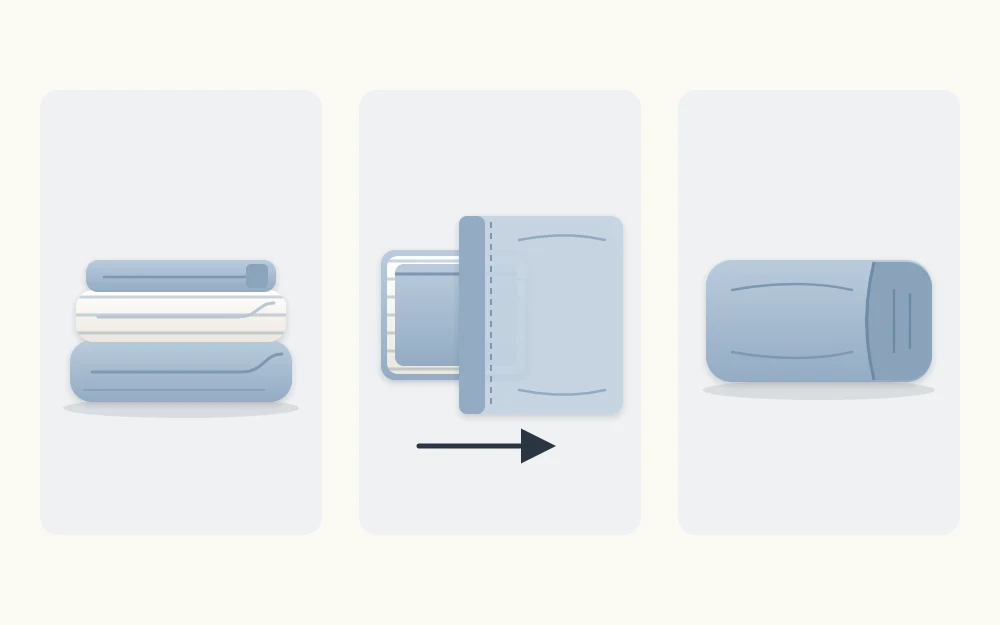
If you prefer to see the fabric, a wide band of ribbon or elastic around the folded stack does the same job. Either way, sets for different bed sizes stop mixing, and a duvet cover can go in the same bundle as the sheets it is used with.
A simple way to fold a fitted sheet
A fitted sheet will never fold as flat as a flat sheet, and it does not need to. The aim is a tidy rectangle that stacks.
- Hold the sheet inside out by the two corners of one short edge, with a hand inside each corner.
- Bring your hands together and flip one corner over the other, so the two corners nest.
- Run your hand down the edge to the next corner, pick it up and nest it into the first two. Repeat with the last corner.
- Lay the sheet on the bed with the nested corners at one end. The elastic edges now form a rough L shape. Straighten them and smooth the sheet into a rectangle.
- Fold it in thirds lengthwise so the elastic is hidden inside, then fold it down to the size of your other pieces.
The first few attempts may look lumpy. Once the sheet is inside a pillowcase bundle, small lumps do not matter.
Where to keep sheet sets
Linens are easiest to put away when they live near the bed they belong to. These are the usual places in a bedroom:
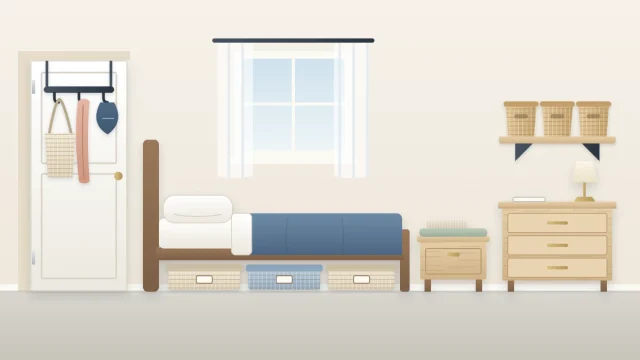
- A dresser drawer. A deep lower drawer holds two or three bundles standing on edge, side by side, so you can lift one out without disturbing the rest.
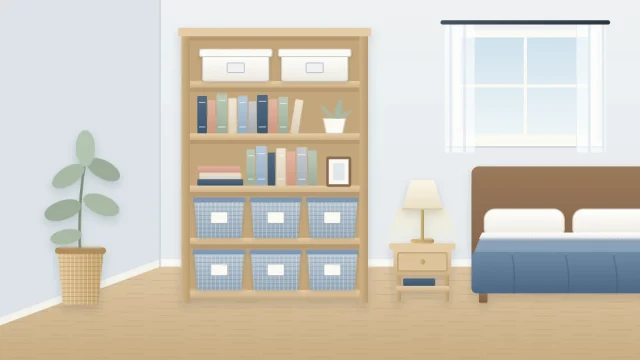
- A shelf with a bin per bed size. One bin for each bed size keeps sets from mixing. The guide to arranging open bedroom shelves explains how to choose bins that fit the shelf.
- A storage bench at the foot of the bed. A bench is close to where the linens are used and deep enough for bundles plus a blanket.
- Under the bed. This suits off-season layers and guest bedding better than the set you change every week.
Measure the drawer, bin or bench before you settle on a folded size, and fold to fit the space. A bundle that is a little too wide is the one that ends up left on a chair.
Storing blankets, duvets and comforters
Bulky layers take the most room and are used the least, so they suit the out-of-the-way spots. Breathable containers are a sound default: zippered fabric storage bags, cotton bags, or boxes that are not sealed airtight. A closed container keeps dust off, and breathable fabric lets a little air move around the filling.
Vacuum storage bags save a great deal of space, and they are handy for synthetic blankets and comforters. Check the care label first, though. Some fillings, such as down, may not suit long periods of compression, and a maker’s care instructions take priority over saving space.
For off-season bedding kept low, the guide to what belongs under the bed lists what suits that space and what does not. If you swap bedding at the same time as your clothes, the routine in the guide to rotating clothes by season works for both.
Good to know
Keep stored bedding away from radiators and baseboard heaters, and never over a floor vent. Choose a spot that stays dry.
Spare pillows
Spare and guest pillows keep best in a breathable cover, such as a cotton pillow bag or a clean zipped pillow protector, and laid flat or stood on edge without heavy things on top. A high shelf suits pillows well because they are light.
Store everything clean and completely dry
Whatever the container, linens should go into storage freshly washed and fully dry. Fabric that is put away even slightly damp can develop a musty smell or mold, so give thick items such as duvets and comforters extra drying time, and wait until they are cool before packing them.
Wool blankets and other natural fibers deserve a little more attention, because clothes moths feed on such fibers. Clean, dry textiles in well-closed containers are the main protection. For general further reading, see the University of California Statewide IPM Program’s page on clothes moths.
Refold and rotate now and then
Linens that sit folded for a long time develop firm creases along the same lines. When you change seasons, take stored pieces out, shake them, and refold them along different lines before they go back.
Rotating sheet sets helps too. Put freshly washed bundles at the back or bottom and take the next one from the front or top, so every set gets used in turn.
Frequently asked questions
How many sheet sets do I need per bed?
Two or three sets per bed is a common guide: one in use, one in the laundry and possibly a spare. It is not a rule. If you wash and remake the bed the same day you may need fewer, and a guest bed or a child's bed may justify one more.
Can I store a duvet in a vacuum storage bag?
Check the care label first. Vacuum bags save a lot of space and are often fine for synthetic fillings, but some fillings, such as down, may not suit long compression. If the label advises against it, use a zippered fabric bag or a cotton bag that lets air move.
Where do I keep sheets if I have no linen closet?
Keep them near the bed they belong to. A deep dresser drawer, a bin on a shelf, or a storage bench at the foot of the bed all work for the sets in regular use. Off-season layers and guest bedding can go in closed containers under the bed.