What to Store Under the Bed and What to Keep Out
A simple three-part test for what deserves the space under your bed, with a list of good candidates, a list of things to keep out and three limits on how much to store.
The floor under the bed is generous in area and awkward in every other way. It is low, dark, a little dusty and slow to reach. Deciding what to store under the bed comes down to matching those conditions with the right kind of belongings, and keeping everything else out.
One principle covers nearly every case: the space suits things that are used rarely, are fairly flat, and do not mind being closed in a container. If an item passes all three tests, it is a good candidate. If it fails one, it probably belongs somewhere else in the house.
Good things to store under the bed
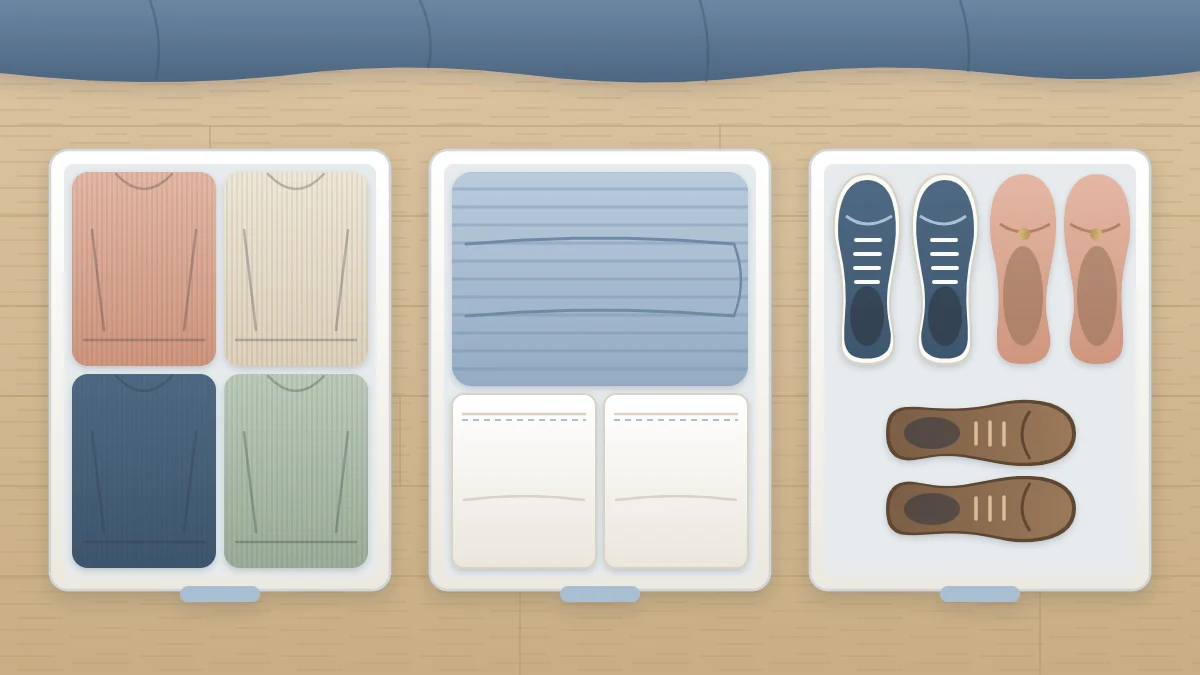
- Out-of-season clothes. Heavy sweaters in summer and shorts in winter are needed twice a year: once to put away, once to bring back. They fold flat and free up drawer space for what you are wearing now. The swap itself is covered in the guide to seasonal clothes storage.
- Spare bedding and blankets. A second sheet set or an extra blanket is used right where it is stored, so the trip is as short as it can be. How many sets to keep and how to fold them is in the guide on how to store bed linens.
- Guest pillows. They are bulky and seldom needed. A breathable fabric bag keeps them clean without squashing them flat for months.
- Shoes worn occasionally. Formal shoes, hiking boots that fit the clearance or sandals in winter. Everyday pairs belong where you put them on.
- Luggage and bags. A suitcase used a few times a year is a container in its own right. Nest smaller bags inside larger ones so the set takes up one footprint.
- Gift wrap. Rolls and flat sheets are long, light and seasonal, which makes a shallow box a natural fit.
- Keepsakes. Things you want to keep but rarely look at do well in one closed, sturdy box, as long as the room is dry.
What to keep out
- Anything used daily. Kneeling down and sliding a box out is fine a few times a year. Done every day, it soon stops happening, and the item ends up living on the floor beside the bed.
- Paperwork you need to find. Documents you may have to produce quickly should be upright and at hand, not flat in a box behind two others.
- Food. Snacks and pantry overflow can attract pests and are easily forgotten. Food belongs in the kitchen.
- Anything damp or unwashed. Closed containers hold moisture in. Worn clothes, damp towels and wet shoes can turn musty and may develop mold.
- Loose single items. One shoe, one book or one stray cable without a container will drift to the center and gather dust.
- Valuables you would forget. Out of sight is not a filing system. If you are likely to lose track of something important, keep it where you will see it.
- Anything that would block a heating vent. If there is a floor vent under the bed, leave that area empty, and do not push containers up against a baseboard heater.
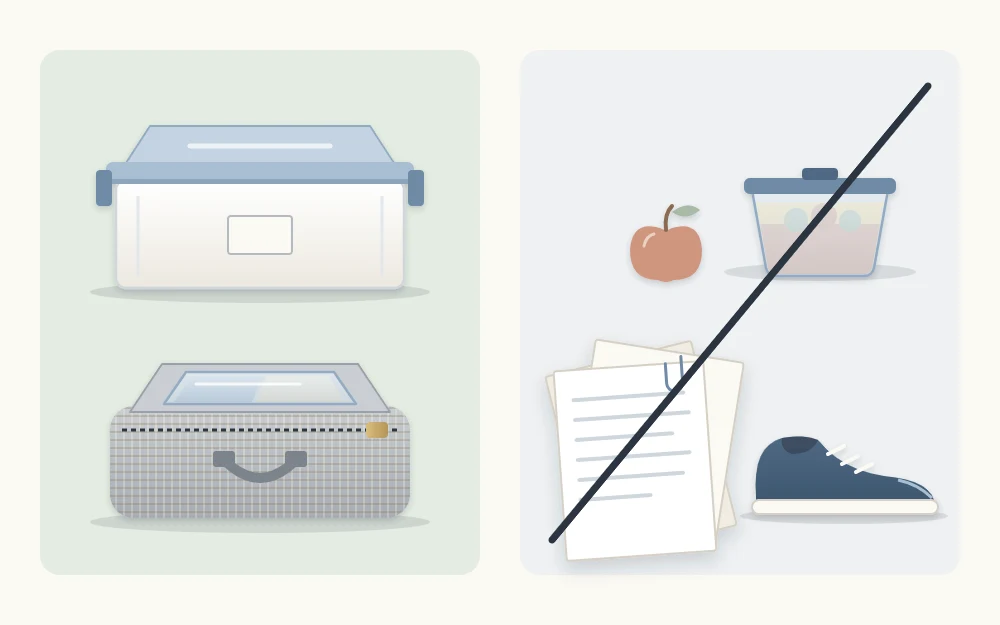
Store here or store elsewhere
| Store under the bed | Store elsewhere |
|---|---|
| Out-of-season clothes, clean and dry | Clothes in current use |
| Spare sheets and blankets | Damp or unwashed textiles |
| Guest pillows in a breathable bag | The pillows you use every night |
| Occasional shoes | Everyday shoes |
| Nested luggage and bags | The bag you carry each day |
| Gift wrap, keepsakes in a closed box | Paperwork you need to find, food, valuables |
Textiles go in clean and completely dry
Most of what suits this space is fabric, and fabric is the category that suffers most from being put away carelessly. Wash or clean everything before it goes in, even items that were worn once and look fine. Then make sure each piece is dry all the way through, including thick seams and waistbands, before closing the lid.
Store textiles in closed containers: lidded boxes or zippered fabric storage bags. A closed container keeps dust off and keeps the contents together. Vacuum storage bags save height, but they compress down and feather fillings, so check the care label before using one for a duvet or pillow.
Tip
Pack each container in the order you will want things back: the first items you will need next season go on top.
How much to store
The space can swallow a surprising amount, which is exactly the risk. Three limits keep it useful.
Fill the containers, not the floor
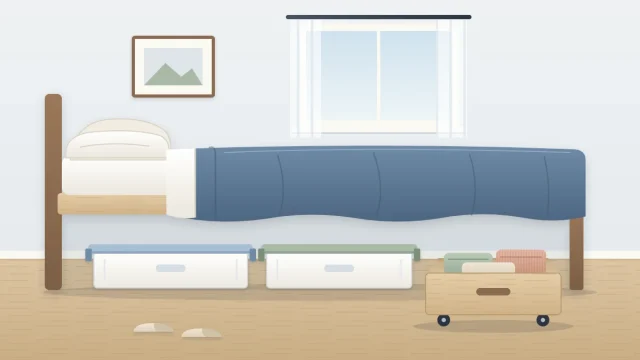
Decide how many containers fit under your frame with room to slide them out, and treat that number as the limit. Nothing goes under the bed unless it is inside one of them. When the containers are full, the space is full, even if bare floor remains between them.
One category per container
A box of winter sweaters is easy to remember and easy to use. A box of sweaters, two belts, some gift bags and a phone charger is a mystery within a month. If a category does not fill a container, use a smaller container instead of topping it up with something unrelated.
Know what is there
Keep a short list of what each container holds and where it sits: left side, right side, foot of the bed. A note on your phone works well, or a slip of paper in the top dresser drawer. It takes two minutes to write and saves you from pulling out every box to find one blanket.
Choose the container after the contents
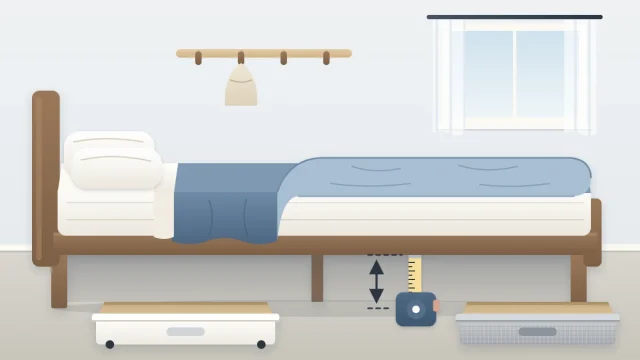
Once you know what is going under the bed, the container more or less chooses itself: soft bags for bulky bedding, lidded boxes for folded clothes, trays or divided organizers for shoes. Measure the clearance under your own frame first, since beds differ a great deal. The options are compared in the roundup of under-bed storage ideas.
Review it when the seasons change
Under-bed storage works best when it is opened on a schedule. The seasonal clothes swap is the natural moment: as each container comes out, check that everything in it is still wanted, still fits and still in good condition. Whatever you would not bother to bring back out is a candidate to donate.
The same moment is a good time to vacuum the floor and wipe the lids. A simple routine for that is in the guide to keeping under-bed storage clean.
Frequently asked questions
Is it okay to store clothes under the bed?
Yes, for clothes you are not wearing this season. Wash them, make sure they are completely dry, fold them and put them in a closed container such as a lidded box or a zippered fabric storage bag. Clothes in current use are better kept in a drawer where you can reach them easily.
Can I store shoes under the bed?
Shoes you wear only now and then are a good fit, provided they go in clean and dry and sit in a tray, box or divided organizer that keeps pairs together. Everyday shoes are better near the door or wherever you put them on, since you will not want to kneel down for them daily.
How do I remember what is stored under my bed?
Keep one category per container and write a short list of what each one holds and where it sits, for example left side or foot of the bed. A note on your phone or a slip of paper in a drawer both work. Update the list whenever you swap the contents.