Bedroom Storage Ideas for Every Part of the Room
A location-by-location tour of where a bedroom can hold more, from under the bed to the back of the door, with what each spot suits, what it does not and the catch to plan for.
Once you have decluttered, what is left has to live somewhere, and the obvious furniture is often already full. The answer is seldom another large piece. Most bedrooms have several spots that could hold more than they do, each with its own strengths and its own catch.
These bedroom storage ideas are arranged as a tour of the room by location, not as a shopping list. For each spot you will find what it suits, what it does not, and the drawback to plan for. Measure your own room as you go.
Three principles before you start
- Closed storage for the many small things, open storage only for what you can keep neat. A shelf of loose odds and ends reads as clutter even when everything on it has a home.
- Measure the space, then choose the container. Note width, depth and height, and allow for a lid, a handle or a drawer front that needs room to open.
- Leave some room empty. A drawer or bin filled to the top stops working the first time you add one more thing. A little slack is what lets a system last.
It also helps to know which part of the room each thing belongs to before you find it a container. If you have not done that yet, start with setting up bedroom storage zones.
Around the bed
Under the bed
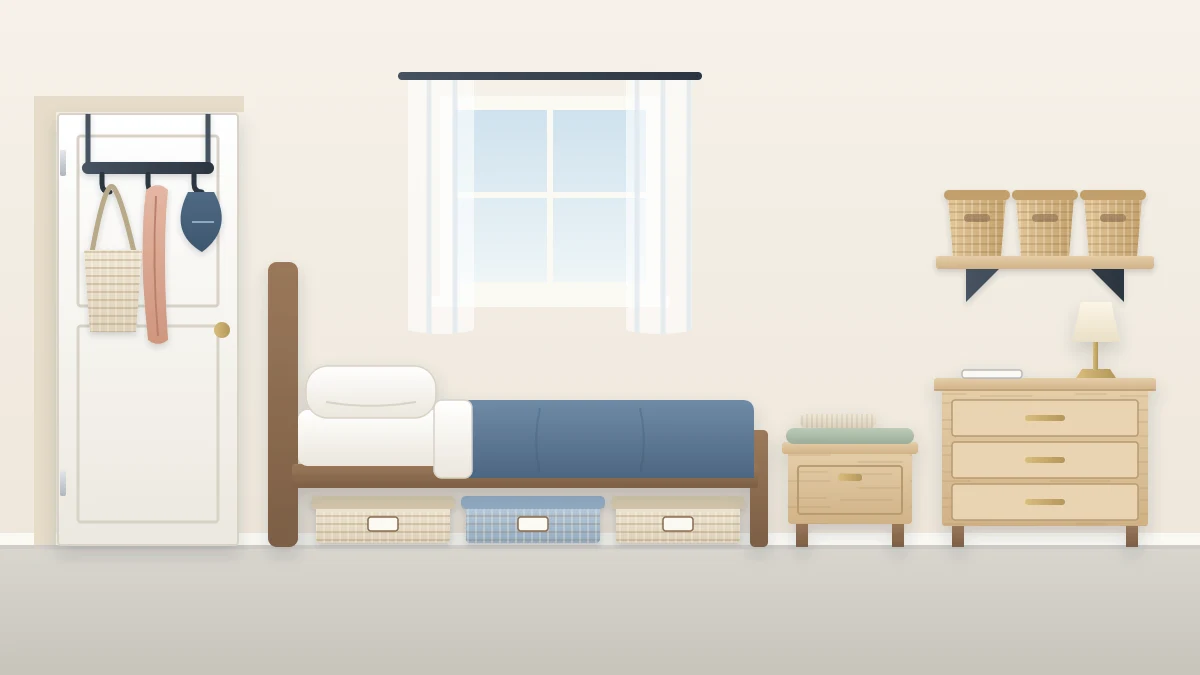
This is usually the largest unused space in the room. It suits things you reach for a few times a year: out-of-season clothes, spare blankets, luggage. It does not suit anything you need daily, because kneeling and pulling out a box each morning soon gets skipped.
The catch is dust, which collects on anything left open there. Use lidded boxes or zippered fabric storage bags, and store textiles clean and completely dry in closed containers. Measure the clearance from the floor to the bed frame before buying. If you use bed risers to gain height, use them within the limits the product states and check that they fit the bed’s legs. There is more detail in these under-bed storage ideas.
The foot of the bed
A storage bench or trunk here holds bulky, soft things such as spare pillows, a comforter or throws, and gives you a place to sit while putting on shoes. It works if you can still walk past comfortably with the lid open. Measure the gap between the bed and the facing wall or dresser first.
The catch is that a deep trunk becomes a pit: whatever is at the bottom is forgotten. Keep it to one or two categories of large items. If spare sheets are heading there, the guide to storing bed linens covers how many sets are worth keeping and how to fold them.
Beside the bed
The bedside holds what you use from bed and little else. A nightstand with a drawer and a lower shelf gives three levels in a small footprint. Where there is no floor space, a narrow wall shelf or a fabric pocket that hangs from the bed frame can do the same job.
The catch is that this spot fills fastest, so keep its storage small on purpose.
The wall above a dresser or at headboard height
Wall space above low furniture can take a shelf or a peg rail. It suits light items you use often and can keep in order: a row of books, a couple of baskets, tomorrow’s clothes on a hook. It does not suit heavy or fragile things, and nothing heavy should sit on a shelf over the head of the bed.
Good to know
Anything on a wall depends on its fixings. Use fixings suited to your wall type, follow the product instructions and stay within its stated rating. If you rent, check the lease before drilling. For more ways to use height, see vertical storage in a small bedroom.
Behind the door
The back of the door is hidden most of the day, which makes it good for things that look untidy elsewhere: a robe, bags, belts, worn-once clothes. Over-the-door hooks need no tools, and adhesive hooks suit light items if the surface and the product instructions allow.
The catch is thickness. Check that the door still closes with the hooks in place and that what hangs there does not hit the wall. Keep it to a single layer.
The corner at the back of the room
Corners are awkward for standard furniture, so they often sit empty or collect a pile. A corner can take a hamper, a tall basket for extra blankets, a garment rack for tomorrow’s clothes or a narrow shelf unit.
The catch is that a corner out of your daily path is easy to ignore. Give it one clear job. If you place a tall shelf unit or wardrobe there, anchor it to the wall following the furniture maker’s instructions and keep heavy things on the lowest shelves.
Inside furniture you already own
Before adding anything to the room, look at how well the existing furniture is used. Three small additions often free more space than a new piece would:
- Drawer dividers keep categories from mixing, so a drawer holds more without becoming a jumble.
- Shelf risers split a tall shelf gap into two levels, so you are not stacking unstable piles.
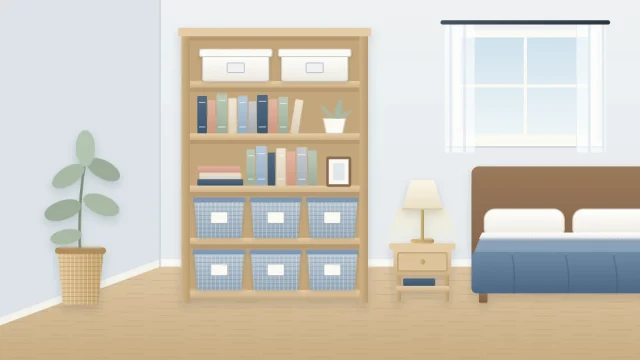
- Bins on a shelf turn open storage into closed storage and let you pull out a whole category at once.
The catch is fit. Measure the inside of the drawer or shelf, not the outside, and check the height with the drawer closed.
The top of a wardrobe or dresser
The top of a wardrobe suits light, rarely used boxes: hats, a spare duvet in a zippered bag, keepsakes. It does not suit anything heavy or anything you need a chair to reach every week. Keep the dresser top itself mostly clear for daily use.
Open versus closed storage
Most rooms need both.
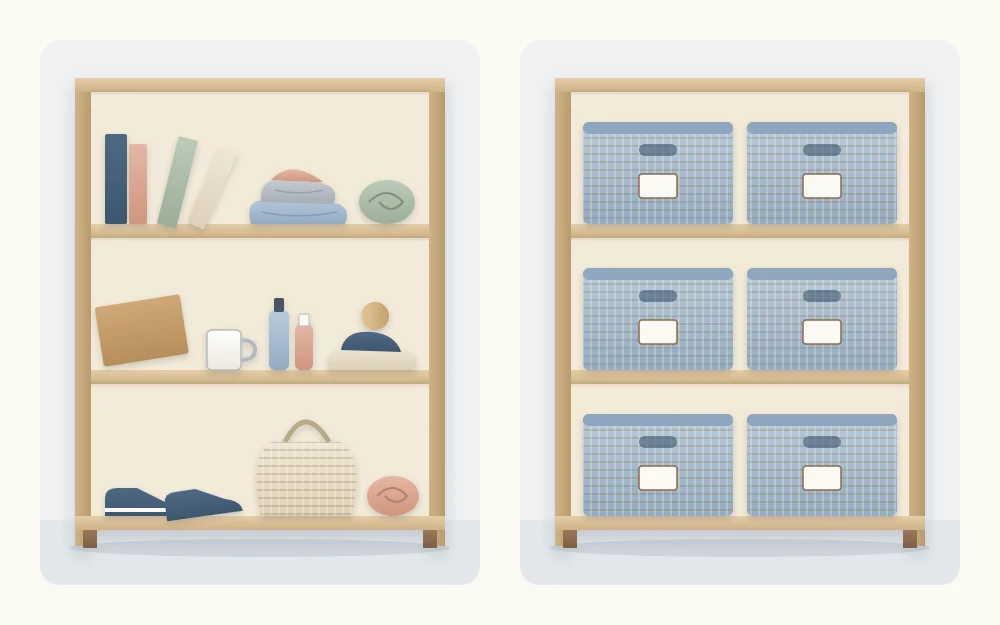
| Open storage | Closed storage | |
|---|---|---|
| Examples | Shelves, hooks, peg rail, garment rack | Drawers, lidded boxes, bins, trunks |
| Best for | A few items used often and easy to keep in order | Many small or mixed items |
| Strength | Fast to reach and to put back | Hides contents and keeps dust off |
| Catch | Everything is on view and gathers dust | Easy to overfill and forget what is inside |
As a starting point, keep open storage to things you handle at least weekly and would not mind seeing every day, and give everything else a drawer, box or bin.
Frequently asked questions
How can I add storage to a bedroom without buying furniture?
Start inside what you own. Drawer dividers, shelf risers and bins on existing shelves often free a surprising amount of space. Then look at unused locations such as under the bed and the back of the door, which take low boxes or hooks and do not need a new piece of furniture.
Is open or closed storage better for a bedroom?
Most bedrooms need both. Closed storage such as drawers and lidded boxes suits the many small or mixed things, because it hides them and keeps dust off. Open storage such as shelves and hooks suits a few items you use often and can keep neat without much effort.
What should not be stored under the bed?
Avoid anything you use daily, since reaching under the bed every morning becomes a chore. Avoid loose, uncontained items too, because they gather dust and get pushed out of reach. Textiles should go in clean and completely dry, in closed containers, and nothing should block a floor vent.