Seasonal Clothes Storage: Rotating Your Wardrobe Twice a Year
A step-by-step routine for swapping out-of-season clothes: what to wash, how to pack, which containers suit which garments, where to keep them and how to remember what went where.
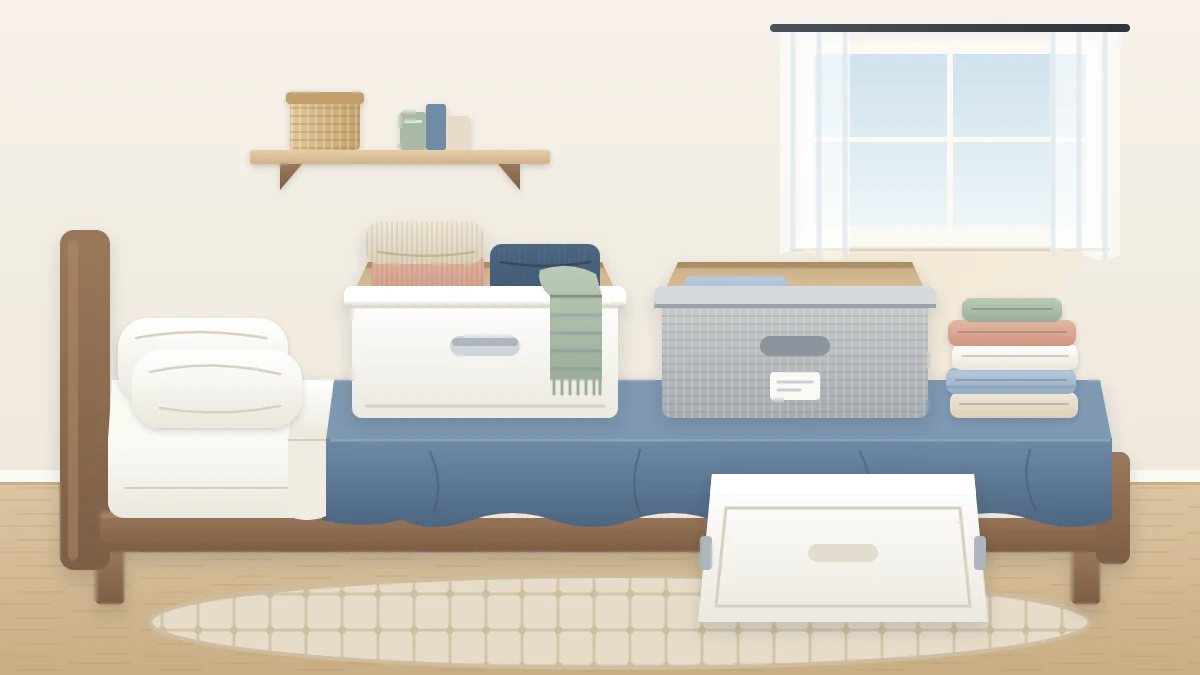
Few bedrooms have enough drawer and hanging space to keep a whole year of clothes within reach at once. Seasonal clothes storage solves that with a simple trade: whatever you cannot wear right now moves out of the best spots, and whatever you can wear moves in.
For many households the swap comes around twice a year and fills an afternoon. The order of work below runs from pulling clothes out to writing down where they went, so the change is quick and nothing comes back creased, musty or forgotten.
Why rotating your clothes helps
The top drawers of the dresser, the middle of the hanging space and the hooks by the door are the easiest places in the room to reach. When thick sweaters sit there through a hot summer, you sort past them every morning to find a T-shirt. Rotation keeps that prime space for clothes you can wear this week.
The result is practical. Drawers close without a push, each one shows its whole contents, and clean laundry has an obvious place to go. The swap is also a natural checkpoint: twice a year, every garment you own passes through your hands.
When to make the swap
Timing depends on your climate, not on the calendar. A useful signal is that you have not reached for the heavy things, or the light ones, for a couple of weeks and do not expect to soon.
- Changeable weather: swap in two stages. Move the extremes first, such as the thickest knits or the shorts, and the rest a few weeks later.
- Mild climates: a full rotation may be more than you need. One box for the true extremes can be enough.
- Year-round layers: a light jacket, a cardigan and your everyday jeans usually stay out all year.
The rotation routine, step by step
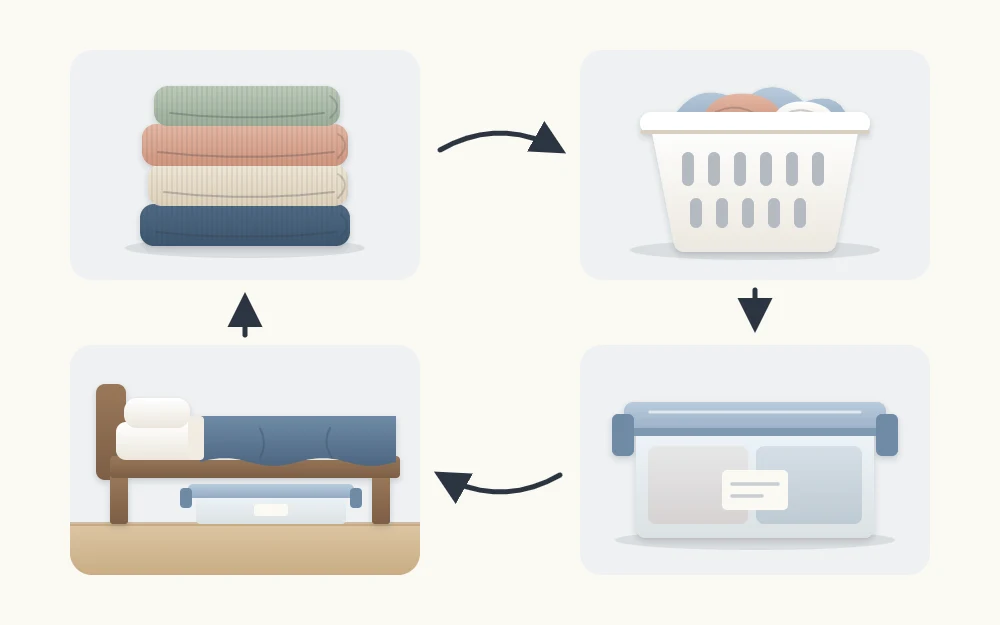
- Pull out what is leaving. Go through the drawers, the hanging space and the hooks, and gather the outgoing season on the bed, grouped by type.
- Set aside what you did not wear. Anything that stayed untouched all season goes in its own pile to consider donating. The guide to deciding which clothes stay has plain questions for the items you hesitate over.
- Wash or clean everything. That includes pieces worn only once. Follow each care label, and send anything marked dry clean only to the cleaner before it is packed.
- Make sure it is completely dry. Give thick knits and waistbands extra time after the dryer or the line. Fabric that goes into a closed box slightly damp comes out smelling musty.
- Fold knits instead of hanging them. Sweaters stretch at the shoulders when they hang for months. Fold them loosely and put the heaviest at the bottom of the stack.
- Pack one category per container. Sweaters in one, scarves, hats and gloves in another. Fill each container without cramming, so the clothes are not pressed into hard creases.
- Move the new season in. Wipe the emptied drawers with a damp cloth, let them dry, and give the incoming clothes the homes that were just freed.
Choosing containers
You may already own most of what you need. Measure the place where the containers will go before you buy anything new.
| Container | Suits | Keep in mind |
|---|---|---|
| Lidded plastic boxes | Sweaters, jeans, anything that stacks | The lid should close fully; clear sides let you see the contents |
| Zippered fabric storage bags | Bulky knits, jackets, soft shapes | They flex to fit odd spaces but do not stack well |
| A suitcase | One season of lighter clothes | You have to unpack it before every trip |
| Vacuum storage bags | Bulky synthetic items such as fleece and padded jackets | Check the care label before compressing anything |
Vacuum storage bags save a lot of room, but long compression does not suit every material. For down and other natural fillings, wool and delicate fabrics, follow the care label, and choose a roomy box or bag when the label is unclear.
Where the containers go
Look for a place that is cool, dry and dark, and that you do not need for anything used weekly. In most bedrooms that means one of three spots:
- Under the bed. Low boxes or zippered bags fit well here. Measure the clearance first; the guide on measuring and setting up under-bed storage walks through it.
- A high shelf. This suits light boxes you only lift down twice a year.
- The top of a wardrobe. Keep this for light containers, and keep a sturdy step stool nearby.
Keep containers away from radiators and baseboard heaters, off floor vents, out of direct sun and clear of any wall that gets damp. Spare blankets and heavy duvets usually rotate on the same day, and the guide on how to store bed linens covers those.
Good to know
Boxes on top of tall furniture add height and load to it. A wardrobe or tall dresser should be anchored to the wall following the furniture maker’s instructions, with heavy things kept low.
Protecting stored clothes from moths
Clothes moths are a common worry with stored wool and other animal fibers. The main protection is the routine you have already followed: garments that go in clean and completely dry, in containers that close well. For how to recognize and manage a problem, see the University of California Statewide IPM Program’s page on clothes moths.
Keep a list of what is stored where
Six months is long enough to forget what you own. Before a container is closed, write down what is in it and where it is going.
- Label each container on the side that faces out, or number it and keep the matching list.
- Keep the list in a note on your phone or on paper in a drawer.
- Add anything you meant to replace, such as worn-out gloves, so you can buy it before the cold arrives.
Unpacking at the next change
Stored clothes often come out with fold lines and a closed-in smell. Shake each piece out and hang it in open air for a day, or wash it if the care label allows and it needs it. Look each item over as you go, and move anything you are no longer glad to see into the donation pile before it claims drawer space again.
Then run the routine in reverse for the season that is ending. Wipe the empty containers with a damp cloth and let them dry before refilling them.
Frequently asked questions
Do I need to wash clothes before storing them for the season?
Yes. Wash or clean everything first, including pieces worn only once, and follow each care label. Stains that are barely visible now can set over several months. Just as important, make sure every item is completely dry before it goes into a closed container, because trapped dampness leads to a musty smell.
Should sweaters be hung or folded for storage?
Fold them. Knitwear that hangs for months tends to stretch at the shoulders and grow longer. Fold each sweater loosely, stack the heaviest at the bottom and avoid cramming the container, so the knits are not pressed into hard creases while they wait for the next cold season.
Are vacuum storage bags a good idea for clothes?
They work well for bulky synthetic items such as fleece and padded jackets, and they save a lot of room. Long compression does not suit every material, though. For down and other natural fillings, wool and delicate fabrics, follow the care label, and use a roomy box or zippered fabric bag when in doubt.