Keeping Under-Bed Storage Clean: Dust, Access and Upkeep
Why dust gathers under the bed and how to manage it: closed containers, a short slide-out-and-vacuum routine, easy access, fresh contents and a yearly review.
The space under a bed is still, dim and rarely disturbed, and that is exactly why dust settles there. Air moves through the rest of the room every time someone walks across it, while the floor beneath the frame can go untouched for months. Anything stored there shares the same conditions.
Keeping under-bed storage clean does not take special products. It takes two things: containers that close, and a simple routine for sliding them out now and then. This guide sets out both, along with ways to make the space easy enough to reach that it does not get forgotten.
Choose containers that close
The container does most of the work between cleanings. If you are still deciding what belongs in this space at all, start with the guide on what to store under the bed, then pick containers with these points in mind.
- Lids that close fully, or zippers. A lid that sits loosely on top or leaves a gap at the handles lets dust in. Check that the lid still closes once the box is full.
- Wipeable surfaces. Smooth plastic lids clean with one pass of a damp cloth. Textured or woven surfaces hold on to dust and need vacuuming instead.
- Fabric bags for some textiles. Zippered fabric storage bags let a little air through, which suits bulky items such as duvets and wool blankets that are better not sealed tight for long periods.
- Open trays only for things in regular use. An open tray or drawer is fine for shoes or clothes that are worn and cleaned often. For anything that sits for months, it is a dust shelf.

A simple routine for the floor and the lids
Once a month suits many homes. A room with carpet, a pet or an open window near the bed may need it more often, and a seldom-used guest room less. Adjust the interval to what you find when you look.
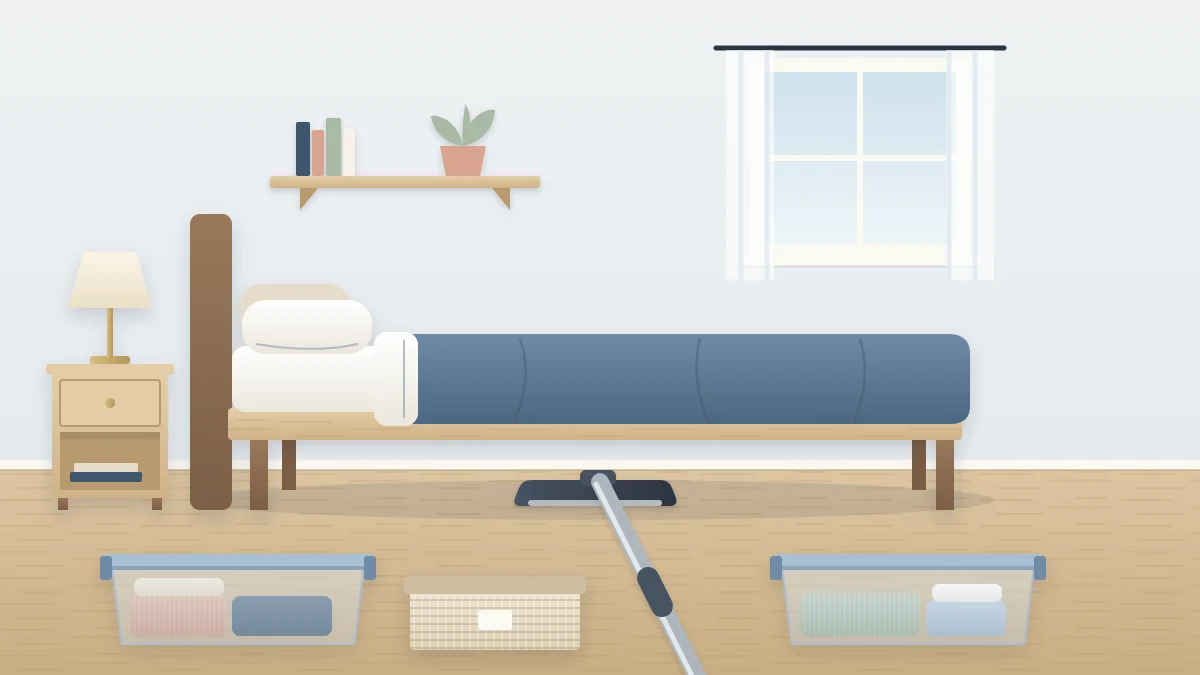
- Slide everything out. Bring every container into the open, in the order they sit, so they are easy to put back.
- Retrieve the strays. Socks, books and whatever else has rolled under go back to their homes.
- Vacuum or sweep the floor. Reach right to the wall and around each leg of the bed, where dust gathers most.
- Wipe the lids. Use a damp cloth on rigid lids and let them dry. Vacuum fabric bags with a brush attachment or shake them outdoors.
- Slide everything back in the same order. A fixed position for each container means you always know which one to pull.
The job is short when the containers are few and move easily. If it feels like a chore, that usually points to the layout; the guide on how to set up under-bed storage explains how to plan it so everything slides.
Tip
Do the under-bed routine on a day when the sheets are being changed. The bedding is already off, so nothing hangs in the way.
Bed skirts help, and need washing too
A bed skirt hides the containers and slows the dust that drifts in from the room. It does not stop it, and the fabric itself collects dust along the hem where it meets the floor.
Wash it from time to time as its care label directs, and vacuum along the hem in between. Choose one that lifts or parts easily. A skirt that has to be wrestled out of the way makes every container harder to reach.
Make it easy to reach
Under-bed storage gets dirty when it gets forgotten, and it gets forgotten when it is hard to reach. Access is part of keeping it clean.
- One-hand rule. A container you can pull out with one hand gets used. One that needs two hands and a kneel gets avoided. Handles on the outward-facing end and a load you can slide comfortably make the difference.
- Best side for the most used. Keep the side with clear floor for the containers you open most. The side against a wall or behind a nightstand suits things you need once or twice a year.
- Know what is inside. Clear boxes, or a tag on the outward end, mean you open one container instead of three.
- Do not overfill. A bulging bag catches on the frame, and a box whose lid will not close stops keeping dust out.
Keep the contents fresh
A closed container keeps dust out. It also keeps in whatever went in with the contents, so what matters most is the state of things on the day you pack them.
Store textiles clean and completely dry in closed containers. That means washed or cleaned as the care label says, and dried all the way through, including thick seams, waistbands and the filling of duvets and pillows. Items that feel dry on the surface can still hold moisture inside. Shoes go in clean and dry as well.
A musty smell when you open a container means something went in damp. Take everything out, air it, rewash whatever smells, and dry it fully before it goes back. Wipe the empty container with a damp cloth and let it dry with the lid off.
Keep vents and heaters clear
Good to know
Check the floor and the wall under the bed for a floor vent or a baseboard heater. Do not cover a vent or push containers up against a heater. Leave that section empty so air can move.
A yearly review
Once a year, open every container, not just the ones you use. Things stored out of sight are easy to forget, and it is common to find clothes that no longer fit, bedding for a bed you no longer own or a duplicate of something bought since.
- Remove what you forgot you owned and decide on it: use it, donate it or let it go.
- Refold what you are keeping and check that it is still fresh.
- Check lids, zippers and handles, and replace a container that no longer closes.
- Combine half-empty containers, so there are fewer to move at each cleaning.
A good moment for the review is a seasonal changeover, when the containers are open anyway.
Where this fits in the wider routine
The under-bed check is one line in a monthly list, alongside straightening drawers and clearing the nightstand. The complete weekly, monthly and seasonal plan is in the guide on how to keep a bedroom organized.
Frequently asked questions
How often should I clean under the bed when I store things there?
About once a month suits many homes: slide the containers out, vacuum or sweep, wipe the lids and return everything in the same order. Rooms with carpet or pets may need it more often and a guest room less. Let what you find decide the interval.
Why do things stored under my bed smell musty?
A musty smell usually means something was packed before it was completely dry. Empty the container, air the contents, rewash anything that smells and dry it all the way through. Wipe the container with a damp cloth and let it dry with the lid off before refilling.
Does a bed skirt keep dust out from under the bed?
It slows the dust that drifts in from the room and hides the containers, but it does not stop dust, and the fabric collects some along the hem. Wash it as its care label directs, and still use containers that close for anything stored for months.