Under-Bed Storage Ideas: Using the Space Beneath Your Bed Well
Six ways to use the space beneath your bed, from low lidded boxes to a lift-up storage bed, compared by what each suits, how easy it is to reach and how well it keeps dust out.
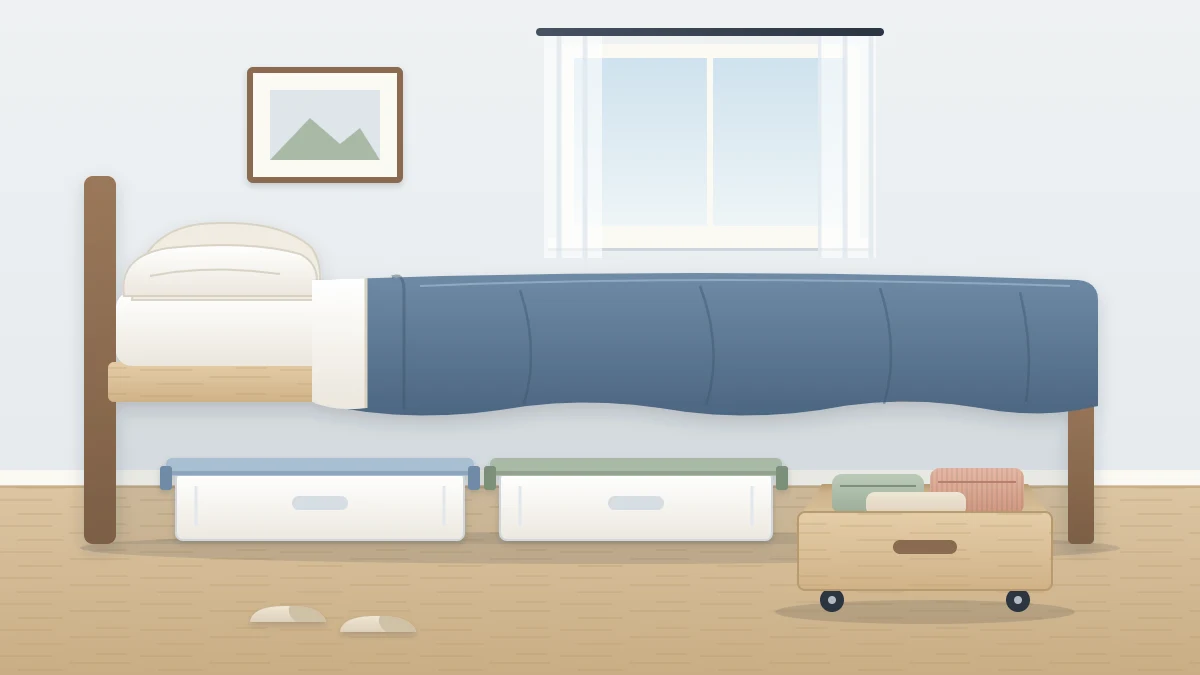
The floor beneath a bed on legs is often the largest unused storage area in the room. It is also one of the easiest to waste: a few loose things get pushed under, drift toward the middle and stay there. The under-bed storage ideas below run from the simplest container to the most built-in, so you can pick the one that fits your bed and the way you will reach it.
Most under-bed storage ideas succeed or fail on fit, so the choice depends less on the container than on the space itself. Before comparing options, take a look at four things under your own bed.
Four things that decide what will fit
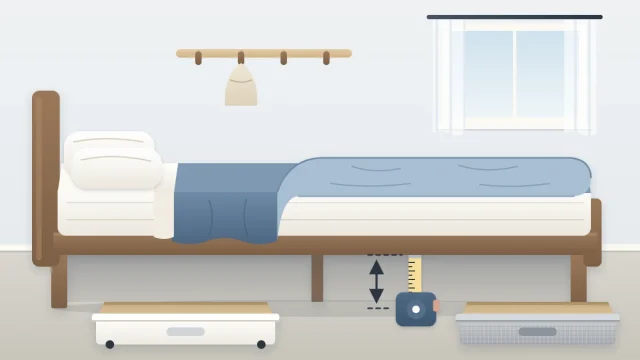
- Clearance. Measure from the floor to the lowest part of the frame, which is often a side rail and not the slats. A container needs to be a little shorter than that, lid and handles included. Many frames leave somewhere around 6 to 12 in (15 to 30 cm), but beds vary widely, so measure your own.
- Legs and rails. A center support rail or extra legs in the middle split the area into two or more bays. Measure each bay on its own instead of the whole width.
- Room to pull out. A container as long as the bed is deep only works if there is that much clear floor beside the bed. With a wall or a nightstand in the way, plan for shorter containers or access from the foot.
- The floor. Wheels roll well on hard floors and tend to drag on thick carpet. On carpet, a smooth-bottomed box that slides is often easier. On a hard floor, check that whatever you choose will not scratch it.
The full measuring process, including how to plan the layout bay by bay, is covered in the guide on how to set up under-bed storage.
Low lidded boxes
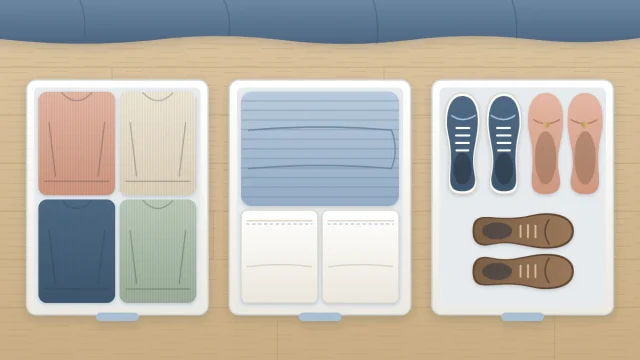
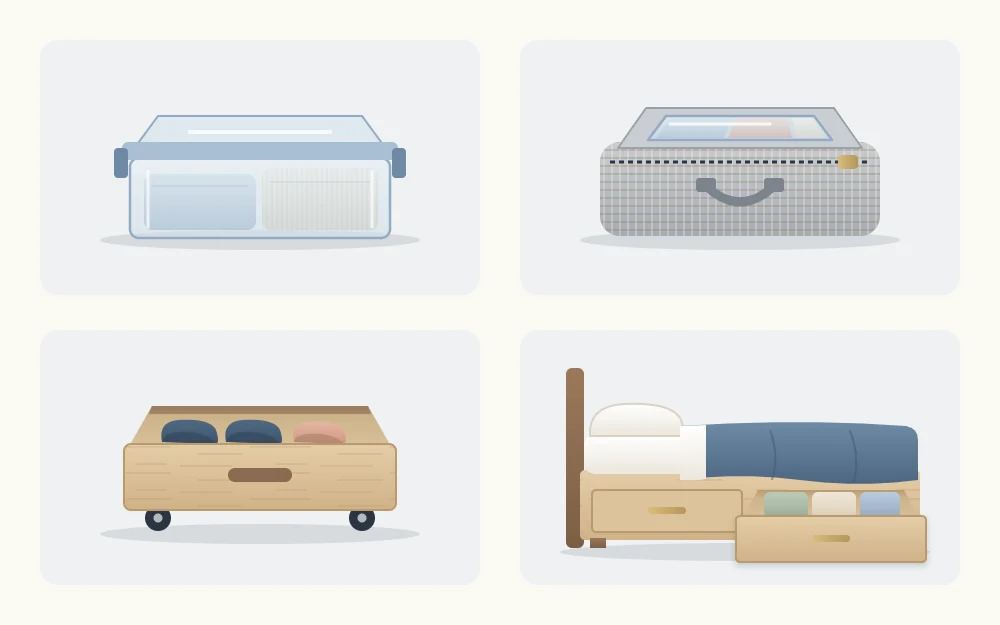
The plain starting point: a shallow plastic box with a lid that closes all the way around. It suits folded clothes, spare bedding and anything you want kept clean for months at a time.
Reach: moderate. You slide the whole box out and lift the lid. A handle on the short end helps. Dust: good, provided the lid fits closely. Clear or translucent boxes let you see the contents without opening them.
Zippered fabric bags
Soft bags with a zipper and a clear panel on top are lighter than boxes and give a little, which helps under a frame with awkward clearance. They suit soft, bulky things such as duvets, blankets and sweaters. They are less suited to shoes or anything with hard corners.
Reach: moderate. Look for a handle on the side that will face out. Soft bags can sag and catch on the frame if overfilled. Dust: fairly good with the zipper closed, though fabric lets more through than a rigid lid.
Wheeled bins, drawers and shoe trays
A shallow open drawer or a lidded bin on small wheels rolls out with one hand, which makes it the best choice for things you reach for every week or two.
Reach: easy on hard floors, less so on deep carpet. Check which way the wheels run: some roll only lengthwise. Dust: an open rolling drawer keeps almost none out, so use it for things that are used and washed often, or choose one with a lid or a fitted cover.
Shallow trays for shoes
A low tray or a divided shoe organizer keeps pairs together and stops single shoes from wandering to the middle of the bed. It suits shoes worn now and then; everyday pairs are better near the door or wherever you put them on.
Reach: easy, since trays are light. Dust: open trays collect it, while versions with a zippered clear cover do better. Put shoes away clean and dry.
A bed frame with built-in drawers
If you are replacing the bed anyway, a frame with drawers turns the whole base into furniture. The drawers run on tracks, so they open smoothly on any floor and nothing gets lost at the back.
Reach: the easiest of all, as long as each drawer has room to open fully. Measure the drawer depth against the space beside the bed, and remember that a nightstand may block the drawer nearest the head. Dust: good, because the base is enclosed, though the drawers themselves are usually open on top inside the frame.
A lift-up storage bed
In a lift-up bed the mattress platform is raised to reveal one large compartment. It gives the most volume and needs no clear floor beside the bed, which helps in a narrow room.
Reach: the least convenient. The bed has to be clear and you lift the platform each time, so it is best for things you need a few times a year. Operate the lifting mechanism as the maker instructs. Dust: very good, because the compartment is closed on all sides.
The options side by side
| Option | Suits | Reach | Keeps dust out |
|---|---|---|---|
| Low lidded box | Folded clothes, bedding | Moderate | Well |
| Zippered fabric bag | Soft, bulky textiles | Moderate | Fairly well |
| Wheeled bin or drawer | Things used often | Easy on hard floors | Only with a lid |
| Shoe tray | Occasional shoes | Easy | Only with a cover |
| Built-in drawers | Everyday overflow | Easiest | Well |
| Lift-up bed | Rarely used, bulky items | Least convenient | Very well |
What goes into each container matters as much as the container. The guide on what to store under the bed sorts the good candidates from the poor ones.
Bed risers, covers and heat
Bed risers sit under the legs and add clearance, which can turn a gap too low for any box into usable space. They have to match the shape and size of your bed’s legs. Use them only within the limits the product states, and check that the bed sits steadily on them before loading anything underneath.
A bed skirt or a bedspread long enough to reach the floor hides the containers and slows the dust a little. Make sure it lifts easily, or it becomes one more reason not to put things back.
Good to know
Look for a floor vent or a baseboard heater before you fill the space. Do not cover a vent or push containers against a heater; leave that section empty and let the air move.
Whichever option you choose, the space needs an occasional clear-out and a vacuum. A simple schedule is in the guide to keeping under-bed storage clean.
Frequently asked questions
What is the best container for under-bed storage?
It depends on what you store and how often you need it. A low lidded box suits clothes and bedding kept for months. A wheeled bin suits things used every week or two. Soft zippered bags suit bulky textiles. Measure the clearance under your frame before choosing any of them.
Do wheeled under-bed bins work on carpet?
They work on low, firm carpet but tend to drag or sink on a thick pile, especially when full. On deep carpet, a smooth-bottomed box that slides is often easier to pull out. If you can, test one container on your own floor before buying several.
Can I use bed risers to make room for storage?
Bed risers add clearance under a frame that sits too low for containers. They must fit the shape and size of the bed's legs, and they should be used only within the limits the product states. Check that the bed sits steadily on them before you store anything underneath.