Bedroom Clothes Storage Ideas Beyond the Closet
Where clothes can live when the closet is small, shared or missing: drawers, a garment rack, a wardrobe, hooks, a bench, bins on shelves and the space under the bed, with what each one suits.
Some bedrooms have a small closet, some have a shared one, and some have none at all. In every case the result is the same: clothes that need a place to live somewhere else in the room, and usually end up on a chair until they get one.
These bedroom clothes storage ideas use the rest of the room. Each option below comes with what it suits and what to watch out for, followed by a way to divide your clothes between them so the things you wear most are the easiest to reach.
Decide what hangs and what folds
Before choosing furniture, sort your clothes into two groups, because hanging space and folding space are not interchangeable.
- Usually better hung: shirts and blouses that crease easily, dresses, structured jackets, coats and tailored trousers.
- Usually better folded: T-shirts, jeans, underwear, socks, sportswear, pajamas and knitwear. Heavy knits can stretch on a hanger, so they are folded.
The care label has the final word on delicate pieces. Once you know roughly how much belongs in each group, you know whether the room needs more drawers, more hanging space or both.
Options for folded clothes
A dresser or chest of drawers
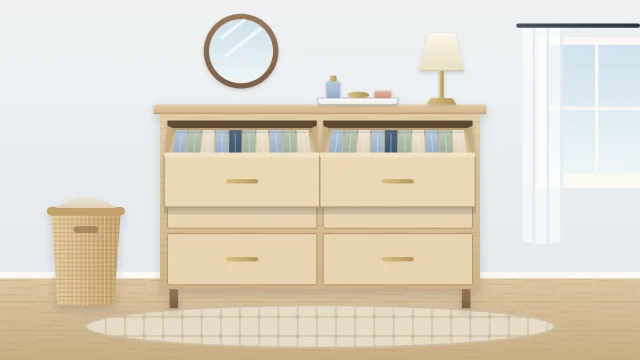
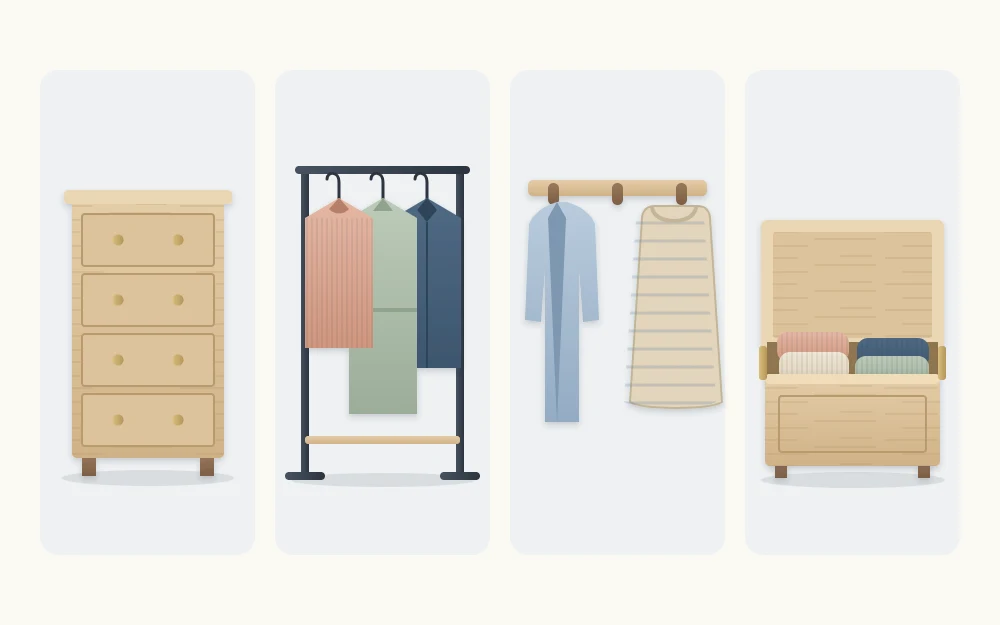
For folded clothes, drawers are hard to beat. Everything is closed away, each category can have its own drawer, and the top gives you a surface. The catch is floor space and the room needed in front to pull a drawer fully open, so measure both before buying or moving one. The guide to arranging dresser drawers so they stay tidy covers the layout inside.
Shelves with bins
If you have shelves but no drawers, bins turn a shelf into something close to a drawer. Give each bin one folded category, such as T-shirts, sportswear or pajamas, and you lift out the whole category at once. Loose stacks straight on a shelf tend to lean and mix, so the bins are what make this work.
A storage bench or trunk
A bench or trunk at the foot of the bed suits bulky knits, sweatshirts and spare layers. It is deep, so it works best for a few large items and poorly for many small ones, which sink to the bottom. Check that the lid can open fully where you plan to put it.
Options for hanging clothes
A freestanding garment rack
A garment rack gives you hanging space with no installation, and it is a good home for the hanging items you wear most. Its limit is that everything on it is visible. A rack stays pleasant to use only when it is edited: a set number of hangers, nothing draped over the top, and off-season pieces stored elsewhere.
A wardrobe or armoire
A wardrobe or armoire is closed hanging space, which hides the clothes and keeps dust off them. It takes more floor than a rack and needs clearance for its doors, and it is tall and heavy once loaded.
Good to know
Tall freestanding furniture such as a wardrobe, armoire or tall chest of drawers should be anchored to the wall following the furniture maker’s instructions, with the heaviest things kept low. The Anchor It campaign from the U.S. Consumer Product Safety Commission has more detail on furniture tip-overs.
Wall hooks or a peg rail
A few hooks or a peg rail make a home for two things that otherwise land on the chair: tomorrow’s outfit and worn-once clothes that are not ready for the wash. Keep the number of hooks small so the wall does not become a second pile. For anything mounted on a wall, follow the product instructions, use fixings suited to your wall type, stay within the limits the product states, and check your lease first if you rent.
Out-of-season clothes: under the bed
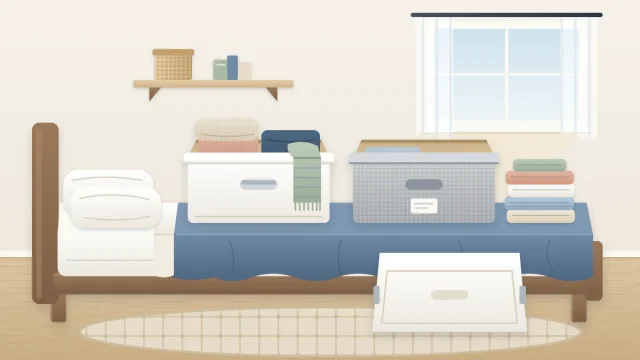
Clothes you will not wear for months do not need to occupy a drawer. The space under the bed holds them well in lidded boxes or zippered fabric storage bags, as long as they go in clean and completely dry. There is a full survey of containers in the guide to under-bed storage options, and the routine for swapping clothes over is in the guide to rotating your clothes by season.
The options compared
| Option | Best for | Floor space | Watch out for |
|---|---|---|---|
| Dresser or chest of drawers | Folded everyday clothes | Medium, plus room to open drawers | Overfilled drawers; anchor tall ones |
| Shelves with bins | Folded categories | Small to medium | Loose stacks that lean and mix |
| Storage bench or trunk | Bulky knits and spare layers | Small | Small items sinking to the bottom |
| Garment rack | Hanging items worn most | Medium | Everything shows, so it must stay edited |
| Wardrobe or armoire | Closed hanging space | Large, plus door clearance | Tall and heavy; anchor it to the wall |
| Hooks or peg rail | Tomorrow’s outfit, worn-once clothes | None | Product limits; too many layers per hook |
| Under the bed | Out-of-season clothes | None | Dust, so use closed containers |
Divide clothes by how often you wear them
With several storage places in one room, the question becomes what goes where. Frequency of use answers it better than garment type alone.
- Worn weekly or more: the easiest places to reach, which usually means the top and middle drawers, the garment rack and the hooks.
- Worn now and then: lower drawers, bins on a shelf, the bench, or whatever space the closet offers.
- Not worn this season: under the bed or in a box on a high shelf, light items only.
If your clothes still do not fit after this, the room may need fewer clothes more than it needs another piece of furniture. Let the storage you have set the limit for each category, and review a category when its drawer or bin will not close.
Choosing for your room
Start with a tape measure. Note the free wall lengths, the depth you can spare without blocking a walkway, and the swing of the room door and any furniture doors. A piece that fits the wall but blocks a drawer from opening will not get used well.
Then pick the smallest set of options that covers your two groups, hung and folded. For many rooms that is one piece for folding, one place for hanging and a few hooks. When floor space is the tightest limit, the guide to using walls, doors and height in a small bedroom shows where else storage can go.
Frequently asked questions
How can I store clothes in a bedroom with no closet?
Combine one place for folded clothes with one place for hanging clothes. A dresser or shelves with bins handle the folded group, and a garment rack, wardrobe or armoire handles the hanging group. Add a few hooks for worn-once clothes and use the space under the bed for out-of-season items.
Is a garment rack a good idea in a bedroom?
It can be, if you keep it edited. A rack needs no installation and puts your most worn hanging clothes within easy reach, but everything on it is on show. Limit the number of hangers, avoid draping things over the top, and store off-season pieces somewhere else.
Which clothes should be folded instead of hung?
T-shirts, jeans, underwear, socks, sportswear and pajamas fold well, and heavy knits are usually folded because they can stretch on a hanger. Shirts that crease easily, dresses, structured jackets and coats are usually better hung. For delicate pieces, follow the care label.