How to Fold Clothes for Drawers: File Folding Step by Step
A plain step-by-step guide to file folding: fold T-shirts, jeans, leggings, underwear and socks into rectangles that stand upright, so every item in the drawer shows from above.
At a glance
What you need
- Tape measure or ruler
- A flat surface such as the bed
- Clean, dry clothes
- Drawer dividers or shallow boxes
If your drawers hold stacks, you know the problem: only the top shirt is visible, and getting to the third one down means lifting two and leaving the pile crooked. Learning how to fold clothes for drawers so that they stand on edge, instead of lying in piles, solves that with no new furniture at all.
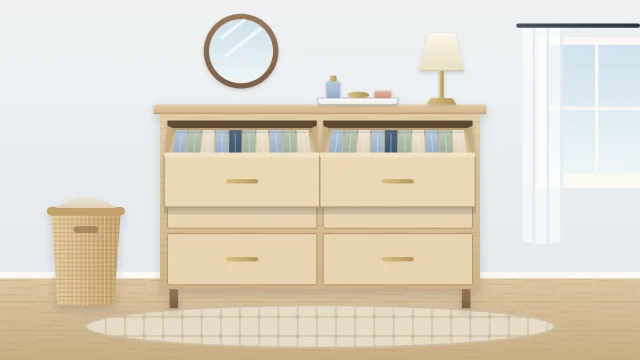
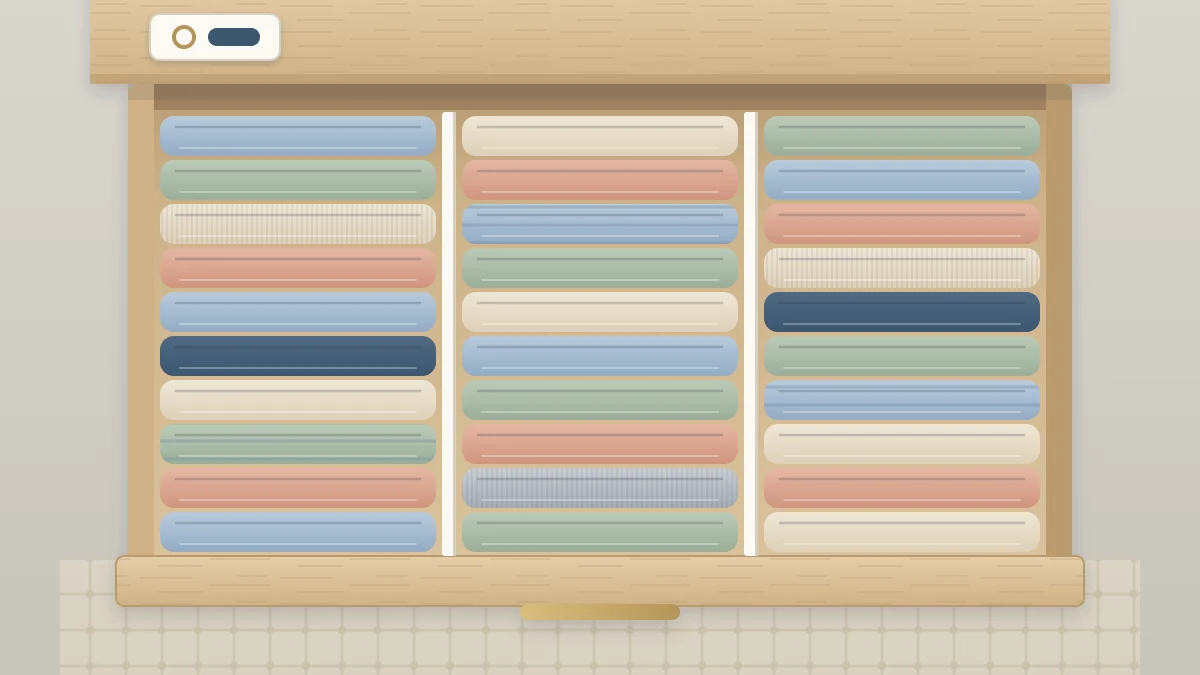
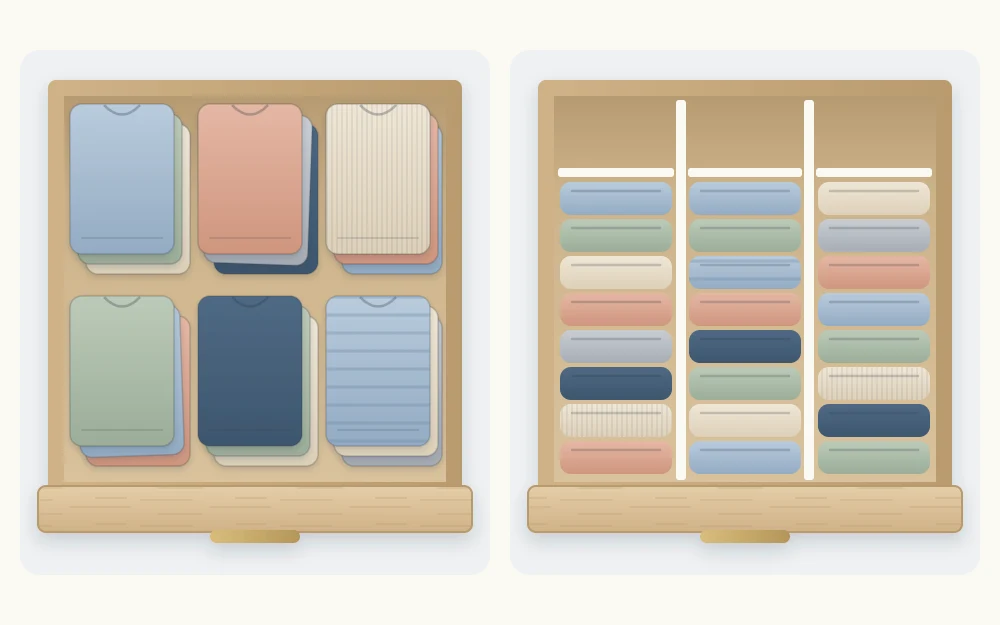
The technique is called file folding, or upright folding. Each item is folded into a small rectangle that stands on its edge, and the rectangles are lined up from the front of the drawer to the back like folders in a file box. Open the drawer and every item shows from above.
Measure the drawer first
The fold is sized to the drawer, not the other way around. Measure the inside height of the drawer from the base to the top of the side. The finished rectangle should stand slightly lower than that, so nothing catches when the drawer closes. A drawer about 6 in (15 cm) deep inside is common in a dresser, but they vary, so measure your own.
Deep drawers take a taller rectangle, which means folding in half at the last step. Shallow drawers need a shorter one, which means folding in thirds. The steps before that stay the same.
How to file fold a T-shirt
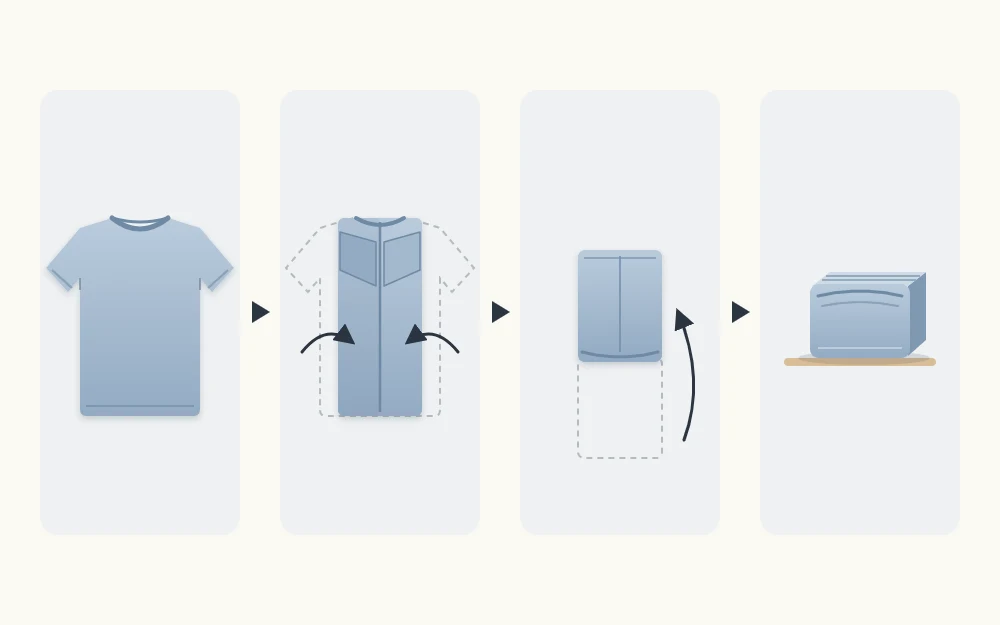
Start with a T-shirt, because the same moves carry over to nearly everything else. Work on a flat surface such as the bed or the top of the dresser.
- Lay it flat. Place the shirt face down and smooth it with your hands.
- Fold one side toward the center. Bring one long edge in so it reaches roughly the middle of the shirt.
- Fold the sleeve back. Turn the sleeve back on itself so it lies within the strip you just made.
- Repeat on the other side. You now have one long rectangle about a third of the shirt’s width.
- Fold the length. Bring the hem up toward the neckline, stopping a little short of the edge. Then fold again, in half or in thirds, until the rectangle matches your drawer height.
- Stand it up. Set it on its folded edge. If it stands without help, it is done. If it flops, make one more fold or a narrower strip.
Place the shirts in the drawer with the smooth folded edge facing up, in rows running front to back. Thin fabrics need an extra fold to stand; thick ones need fewer.
Other clothes, same idea
Long sleeves
Fold the side in as before, then lay the sleeve down along the length of the strip instead of doubling it back, with a slight angle at the shoulder so it stays inside the rectangle. Finish as for a T-shirt.
Trousers and jeans
Fold one leg over the other. Tuck in the point at the seat so the edge is straight. Fold the hem up to just below the waistband, then fold in half or thirds. Jeans are stiff and usually stand after two folds.
Leggings
Fold leg over leg, then fold from the ankles up in thirds or quarters. Slippery fabric stands better in a narrow row or a small box.
Underwear
Fold the sides toward the center, then fold bottom to top once or twice to make a small packet. If that feels like more trouble than it is worth, a divided section where items are simply laid in works as well.
Socks
Lay one sock on the other and fold the pair in half or thirds, or roll it loosely from the toe. Avoid pulling one cuff over the pair to make a ball, since that stretches the elastic over time. Stand the pairs in rows like everything else.
What not to file fold
- Structured jackets and blazers keep their shape on a hanger.
- Shirts and dresses that crease easily are better hung, unless you do not mind pressing them.
- Heavy knits are the opposite case: they can stretch on a hanger, so fold them. Bulky sweaters often do better in a short flat stack of two or three or a loose upright fold on a shelf.
- Delicate items follow the care label, which sometimes says to store flat.
Deciding which categories go in which drawer is a separate job, covered in the guide to dresser organization.
Honest limits of the method
File folding is not faster at the folding stage. Each item takes a few seconds longer than tossing it on a stack. The time comes back when you get dressed, because you see everything at once and take one item without disturbing the rest.
It also depends on the drawer not being overfilled. Rows packed tight are as hard to use as stacks: you cannot slide one item out or back in. Leave enough slack to slip your hand between the rows. If the drawer will not hold a category with that slack, the answer is fewer clothes in it, and the guide to decluttering clothes can help you decide what stays.
The folds do not need to be perfect. A slightly uneven rectangle that stands is doing its job.
Keep half-empty rows standing
The weak point of upright folding shows on laundry day in reverse: once half the shirts are in the wash, the rest lean and slump. Something has to hold the row up.
- A drawer divider that runs front to back keeps each row in its own lane.
- A shallow box or a shoe box without its lid holds a small category and can be lifted out whole.
- A bookend-style stop, or simply sliding the remaining items forward and filling the gap behind with a small box, works in a pinch.
You can make dividers to fit your exact drawer from cardboard you already have; the steps are in the guide to DIY drawer dividers.
Tip
Put clean laundry at the back of each row and take from the front. Every item gets worn in turn, and you notice which ones never make it to the front.
Start with one drawer
Pick the drawer that annoys you most, usually T-shirts, and refold only that one. Use it for two weeks. If it stays in order with ordinary, hurried putting-away, move on to the next drawer. If it does not, check whether it is too full or needs a divider before deciding the method is not for you.
Frequently asked questions
Does file folding save space in a drawer?
Sometimes a little, but that is not the main benefit. The point is that every item is visible from above and can be removed without disturbing the others. A drawer that was overfilled as stacks will still be overfilled as rows, so thin the category out if the rows are tight.
Why do my folded clothes fall over in the drawer?
Usually the row is half empty or the rectangle is too tall and thin for the fabric. Add a divider or a small box to hold the row up, or make one extra fold so the piece is shorter and thicker. Slippery fabrics stand best in narrow lanes.
Does upright folding cause more wrinkles?
For everyday knits such as T-shirts, the fold lines are soft and usually drop out once the item is worn. Fabrics that crease easily, such as crisp cotton shirts or linen, are better on a hanger. Avoid packing the rows tightly, since pressure sets creases more than the fold itself.