Dresser Organization: How to Arrange Drawers That Stay Tidy
A drawer-by-drawer dresser reset: what to remove, which category goes at which height, how dividers keep rows in place, what belongs on the dresser top and how to keep the dresser stable.
At a glance
What you need
- Tape measure
- Drawer dividers or small boxes
- A damp cloth
- A bag for donations
- A small tray for the dresser top
A dresser goes wrong slowly. A drawer gets a little too full, a clean pile is pushed in on top, and soon you are digging for one T-shirt and pulling out three. Good dresser organization is less about neat folding than about a layout: each drawer has one job, and each category has edges it cannot spill over.
This reset takes one drawer at a time, so you can stop partway and still have a usable room. Plan it for after laundry day, when everything is clean and you can see how much you really own.
Step 1: Empty and sort one drawer at a time
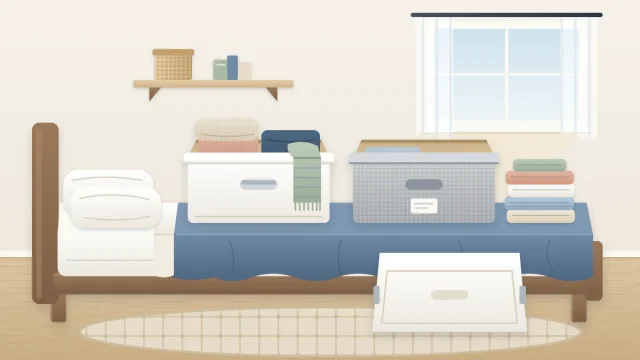
Make the bed and use it as your work surface. Pull out one drawer, tip its contents onto the bed and wipe the inside of the drawer with a damp cloth. Let it dry before anything goes back.
Working drawer by drawer keeps the mess bounded. If you empty the whole dresser at once and run out of time, the bed is buried and the job feels worse than when you started.
Group what is on the bed by type: socks with socks, T-shirts with T-shirts. Then take out anything that does not earn drawer space:
- Clothes that no longer fit or that you never choose.
- Items that are worn out, stretched or missing a partner.
- Things that are not clothes at all: cables, receipts, old cards, spare buttons.
- Out-of-season pieces that could move to longer-term storage.
Put donations in a bag straight away and carry non-clothing items to where they belong. What stays is what the layout has to hold.
Step 2: Assign drawers by category and by height
Two things decide which drawer a category gets: how often you use it and how heavy it is. Small items you reach for daily go at the top, where you can see into the drawer without bending. Heavier, bulkier items go low.
The table shows a typical layout for a six-drawer dresser. Treat it as an example to adapt: your drawers may be fewer, deeper or shared between two people.
| Drawer | What it holds | Why there |
|---|---|---|
| Top left | Underwear, bras | Used daily, small, light |
| Top right | Socks, tights | Used daily, small, light |
| Middle | T-shirts and everyday tops | Used most days, easy reach |
| Middle | Sleepwear, workout clothes | Used often, medium weight |
| Lower | Jeans, pants, shorts | Heavier, used a few times a week |
| Bottom | Sweaters, sweatshirts | Heaviest and bulkiest |
Keep one category per drawer where you can. If two must share, give each a clear half. If something has no drawer left, it may suit a hook, a shelf or a bin better; there are options in the guide to bedroom clothes storage beyond the dresser.
Step 3: Fold so every item shows from above
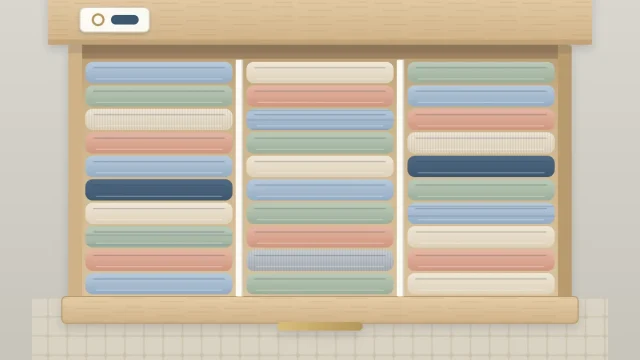
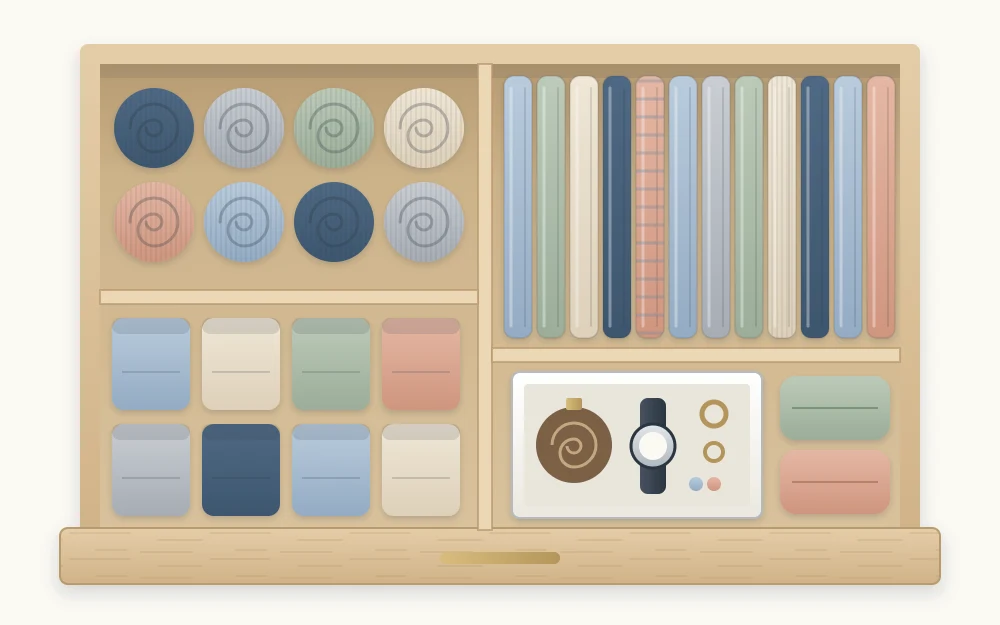
Stacked piles hide everything but the top item, and pulling one from the middle topples the rest. Stand folded clothes on edge in a row, front to back, so that when you open the drawer you see every piece at once.
The fold itself depends on the garment and the height of the drawer. The step-by-step method for each type is in the guide to folding clothes for drawers. Measure the inside height of your drawers first, since that sets how tall each folded piece can stand.
Step 4: Add dividers so categories stay put
Upright rows fall over when a drawer is half empty, and small items migrate. Dividers give each category a wall to lean on. This matters most in the top drawers, where socks, underwear and accessories would otherwise mix within a week.
You can use adjustable drawer dividers, small open boxes, or cardboard ones you cut to size by following the guide to making your own drawer dividers. Measure the inside width, depth and height of the drawer before buying or cutting anything.
Step 5: Leave each drawer a little under full
A drawer packed to the top only works on the day you organize it. Clean laundry will not go back in without force, so it sits on top of the dresser instead. Aim to leave a hand’s width of slack in each row, and enough height that nothing catches when the drawer closes.
If a category will not fit with slack, the choice is honest and simple: fewer items, or a second home for part of the category.
Tip
When you put away laundry, add clean items at the back of each row and take from the front. Everything gets worn in turn, and the pieces you keep skipping become obvious.
The dresser top
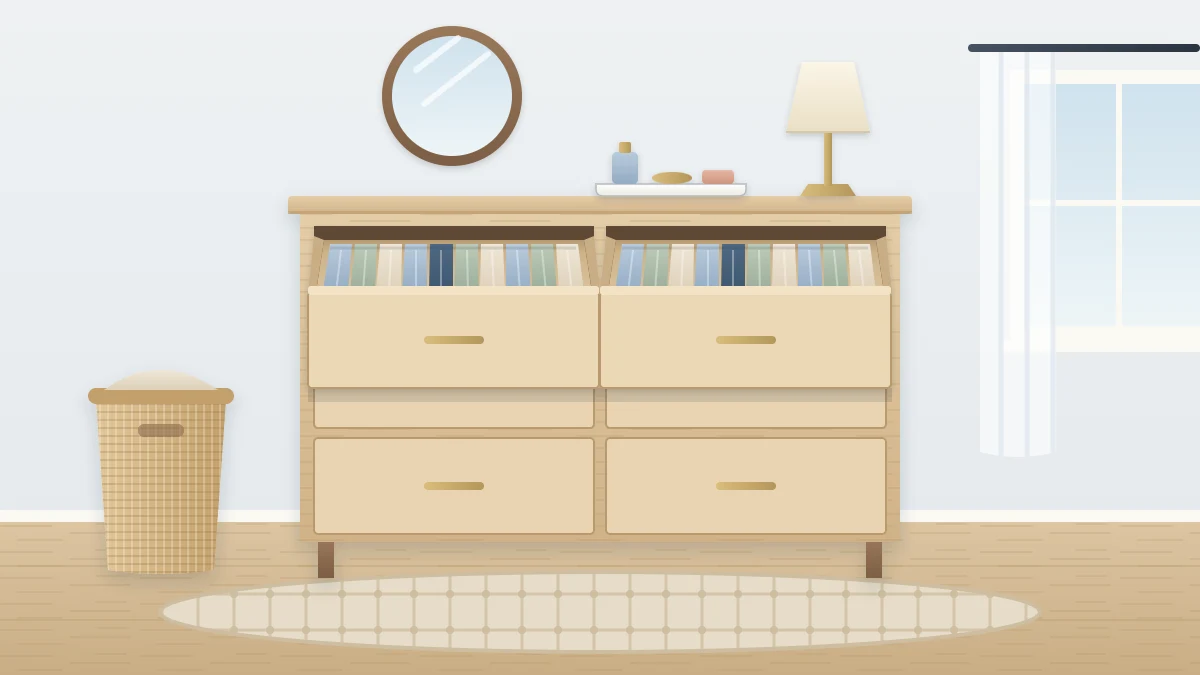
The top of a dresser is a flat surface at hand height, so it collects whatever you are holding. Give it one small tray for daily items such as a watch, keys and the jewelry you wear most. Anything on the tray is at home; anything beside it is passing through and gets put away at the end of the day.
Beyond the tray, keep very little there. A clear top is also what makes it possible to set down a laundry pile and put it away properly.
Keep the dresser stable
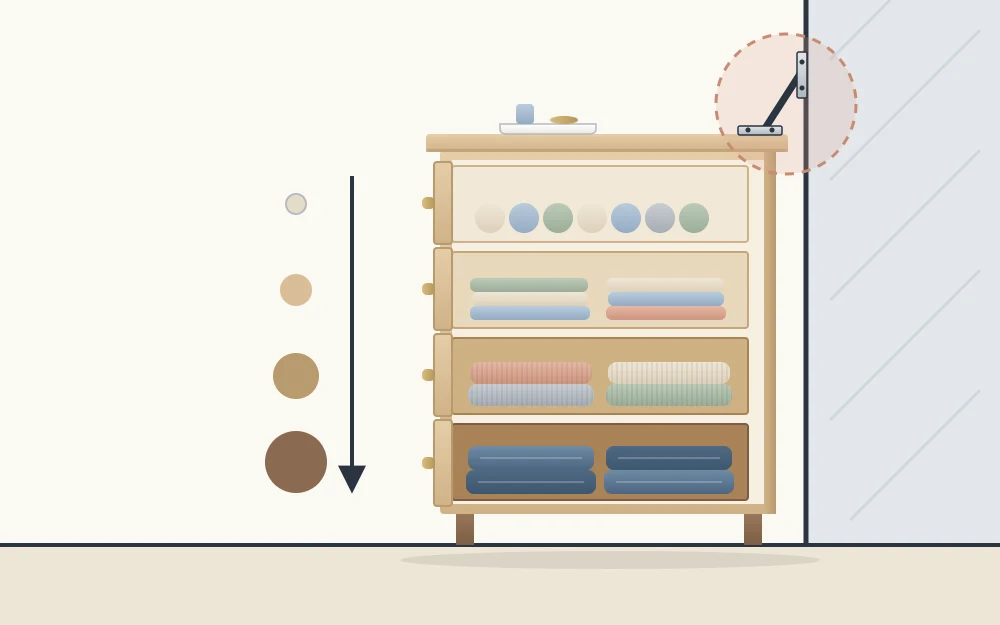
A loaded dresser is heavy, and it can tip forward if several drawers are open at once or if a child climbs or pulls on it. This applies to low, wide dressers as well as tall chests of drawers.
- Keep the heaviest items in the lowest drawers, as in the layout above.
- Open one drawer at a time and close it before opening the next.
- Anchor the dresser to the wall following the furniture maker’s instructions, using the hardware supplied or fixings suited to your wall type.
- Do not place a television or other heavy object on top unless the maker says the piece is designed for it.
Good to know
For more detail on furniture tip-overs and how anchoring works, see the U.S. Consumer Product Safety Commission’s Anchor It campaign. If you rent, ask your landlord before drilling into a wall.
Keeping the layout
The layout holds as long as each drawer keeps its one job. When something new comes in, it goes in its category’s drawer, and if the drawer is at its limit, something else leaves. A quick straighten of the rows on laundry day is usually all the upkeep a well-assigned dresser needs.
Frequently asked questions
What should go in the top drawer of a dresser?
Small, light things you reach for every day, usually underwear and socks. The top drawers are the easiest to see into and to open, so daily items belong there. Rarely used odds and ends in a top drawer push your everyday clothes to a less convenient place.
How full should dresser drawers be?
A little under full. Leave some slack in each row and enough height that the drawer closes without catching. A drawer packed tight looks fine on the day you organize it, but clean laundry will not go back in easily, and it ends up on top of the dresser.
Do I need to anchor a low dresser to the wall?
Low and wide dressers can tip as well as tall ones, especially with several drawers open or if a child climbs on them. Anchoring to the wall following the furniture maker's instructions is the standard advice for any dresser, along with keeping the heaviest items in the lowest drawers.