Vertical Storage in a Small Bedroom: Walls, Doors and Height
Where to find storage above floor level in a small bedroom, from the wall over the dresser to the back of the door, and the rules that keep high storage easy to reach and properly secured.
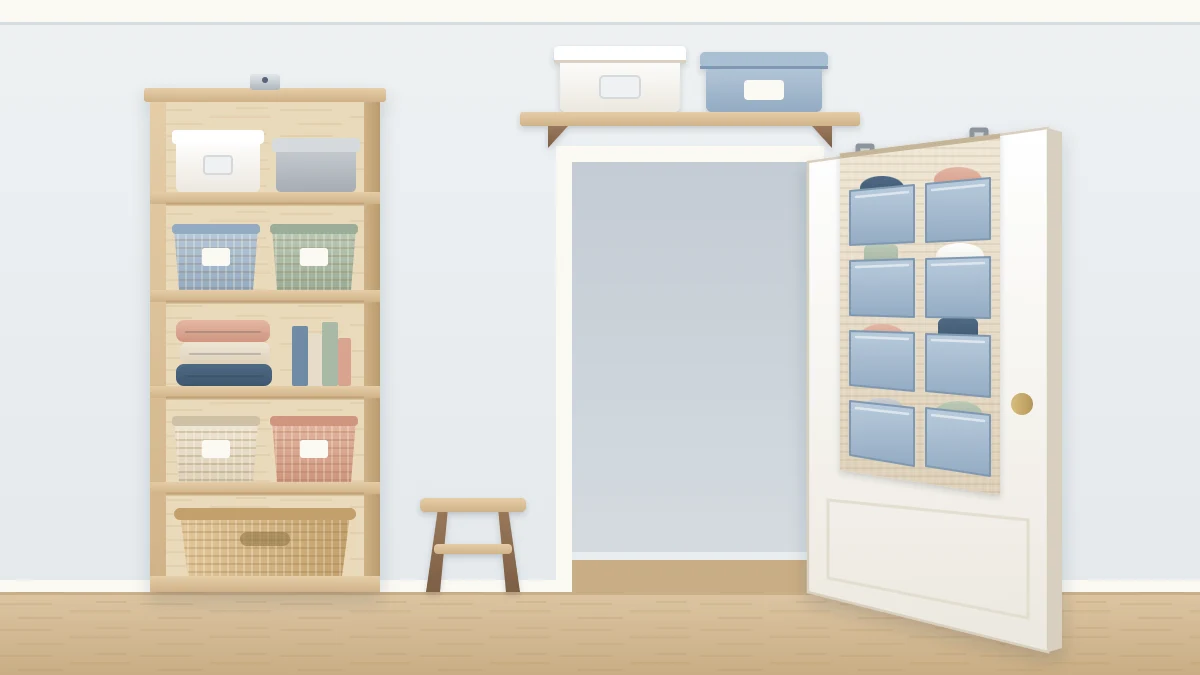
When the bed, a dresser and a path to the door have used up the floor, the remaining storage in the room is above it. Vertical storage in a small bedroom means putting walls, doors and the height of the room to work, so that nothing new has to stand in a walkway.
Height is useful, but it comes with conditions. Things stored high are harder to reach, and anything fixed to a wall or stacked on tall furniture has to be secured properly. This guide goes through the places where height is usually available, then the rules that keep it practical.
Sort by reach before you add anything
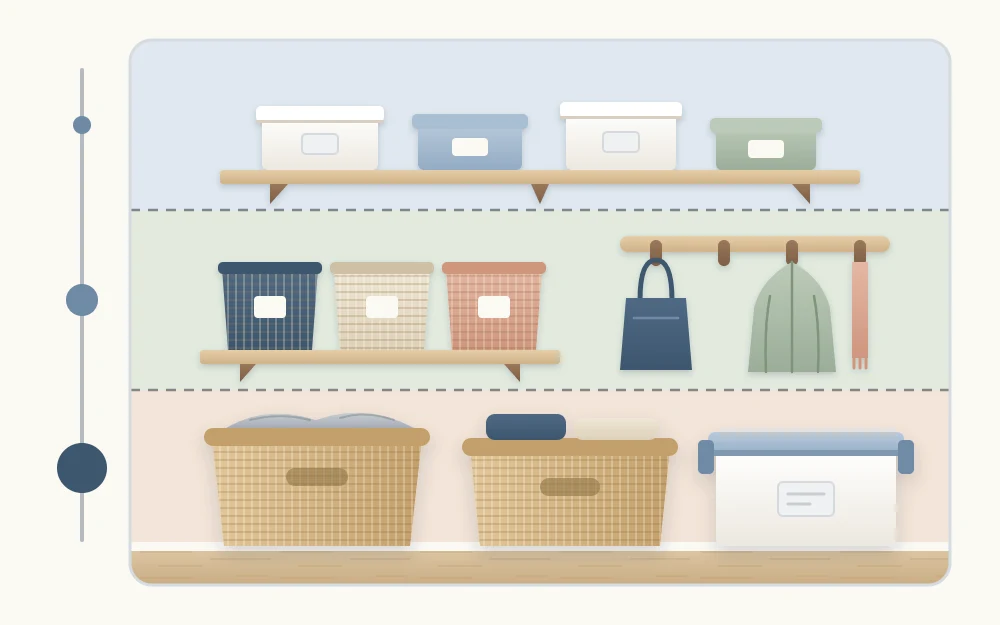
Think of each wall as three bands. The middle band, roughly from your knees to your shoulders, is the easy one, and it should hold what you use every day. The low band suits large and heavy things, because they are easier to lift from there. The high band, above your head, is for things that are light and rarely needed.
Where the height is
Walk around the room and look above waist level. Most small bedrooms have several of these places unused.
| Place | What suits it | Check first |
|---|---|---|
| Wall above the dresser | One or two shelves holding bins | You can still reach the bins and use the dresser top |
| Above the door | A single high shelf for light boxes | The gap between the door frame and the ceiling |
| Beside the bed | A narrow ledge or a pocket organizer | Nothing sits where it could fall onto the pillow |
| Back of the door | Over-door hooks or a pocket organizer | The door still closes and opens fully |
| Top of a wardrobe | Light labeled boxes | You can lift them down from a step stool |
The wall above the dresser
This wall is usually bare, and you already stand in front of it every day. One or two shelves here, holding bins, keep small categories close to where you get dressed. Set the lowest shelf high enough that you can still use the dresser top and open any lid on it. For arranging what goes on the shelves, see the guide to bedroom shelf organization.
Above the door
The strip of wall above a doorway is easy to overlook. A single shelf there can hold a row of light boxes, such as out-of-season accessories or spare bed linens. Because it is the hardest place in the room to reach, keep it for things you need only a few times a year.
Beside the bed and behind the door
Next to the bed, a narrow ledge or a hanging pocket organizer can stand in for a nightstand. Behind the door, over-door hooks or a pocket organizer hold robes, bags, scarves and tomorrow’s clothes. Before you fill either, check that the door still closes properly, opens all the way and does not knock the hooks against the wall.
Choose tall and narrow over low and wide
If you are replacing furniture, a tall, narrow shelf unit or chest of drawers stores about as much as a low, wide one on a smaller patch of floor. The wall above a low piece is often wasted, while a tall one uses it.
The trade is stability. The taller and narrower the furniture, the more it matters how it is loaded and secured, which is covered in the rules below. Narrow units also slot into spaces nothing else fits, and the guide to awkward bedroom corners has more on corners and gaps.
Hooks and peg rails at two heights
Hooks are the quickest kind of vertical storage to use, since hanging something up takes one movement. A row of wall hooks or a peg rail at about shoulder height suits worn-once clothes, a robe and the bag you carry every day.
A second row at a different height doubles the use of the same strip of wall. A lower row suits bags, belts and shorter items, or a child’s things if you share the room. A higher row suits hats and things you grab less often. Leave enough distance between the rows that items on the upper one do not cover the lower.
Rules that keep high storage usable
- Light and rarely used goes highest. If you need it weekly, it belongs in the middle band.
- Nothing heavy above the bed or above head height. Keep heavy items low on any wall, and keep the wall over the pillow for light things only, or leave it empty.
- Keep a sturdy step stool handy. If the stool is in another room, you will stretch or climb on furniture instead. Store it where you can get it in a few seconds.
- Use containers you can lift down with two hands. Several small boxes are easier to handle overhead than one big one.
Fixing things to walls and securing tall furniture
Wall-mounted storage holds only what its stated rating and its fixings allow, and the right fixings depend on the wall type.
- Follow the product instructions for installation and for what the item is meant to carry.
- Use fixings suited to your wall. If you are unsure what the wall is made of, ask at a hardware store or have someone experienced install it.
- Adhesive and over-door products have stated limits too. Read them before loading anything.
- If you rent, check the lease before drilling.
Good to know
Tall freestanding furniture, such as a shelf unit, a tall dresser or a wardrobe, can tip over. Anchor it to the wall following the furniture maker’s instructions and keep the heaviest things on the lowest shelves or in the lowest drawers. The U.S. Consumer Product Safety Commission’s Anchor It campaign explains more about tip-overs.
Leave some wall empty
It is tempting to cover every free surface once you start looking up. Resist that. A room where every wall carries shelves and hooks is harder to keep neat and busier to look at, and each open shelf is one more surface to dust.
Start with the one or two places that solve a real problem, such as the clothes on the chair or the boxes on the floor. Use them for a few weeks, then add more only if something still has no home. Vertical storage is one part of the wider approach in the guide to small bedroom organization, which begins with keeping less in the room.
Frequently asked questions
What should be stored up high in a bedroom?
Keep the highest spots for things that are both light and rarely needed, such as out-of-season accessories, spare bed linens or occasional-use items in small labeled boxes. Anything you reach for weekly belongs between knee and shoulder height, and heavy things belong low, where they are easier to lift.
Can I use over-door hooks on a bedroom door?
Usually, as long as the door still closes properly and opens all the way with the hooks in place. Check the fit before loading them, stay within the limits the product states, and hang light everyday things such as a robe, a bag or tomorrow's clothes instead of heavy loads.
Is it okay to put a shelf above the bed?
Treat the wall above the bed with extra care. Keep nothing heavy there, and place only light items where they could not fall onto the pillow, or leave that wall empty. Any shelf should be installed with fixings suited to the wall type and used within the rating its instructions state.