Bedside Storage Ideas When There Is No Room for a Nightstand
Alternatives to a nightstand for a bed close to a wall or a narrow room: ledges, caddies, headboard shelves, slim carts and stools, each with what it holds and its catch, plus how to choose.
Not every bed has room for a nightstand beside it. When the bed sits close to a wall, or the room is narrow enough that a table would block the path, you still need somewhere to put your glasses, a book and a glass of water at night.
The bedside storage ideas below are alternatives to a standard nightstand. Each one is described with what it holds and what its catch is, so you can match one to the gap you actually have instead of forcing a table into it.
Measure the gap and list what you need
Two short jobs come before choosing anything.
- Measure the space beside the bed. Note the width between the mattress edge and the wall or the next piece of furniture, and the length of free wall at pillow height. A gap of around 8 in (20 cm), for example, rules out most tables but still suits a ledge, a pocket or a slim cart. Measure your own, since beds and rooms vary.
- List the three or four things you use at night. For many people that is a phone or alarm clock, glasses, the book they are reading and water. Leave out anything you only think you might want.
Then pick the smallest option that holds that list. A small surface cannot collect much clutter, which is an advantage in a tight room. If you are unsure what belongs at the bedside at all, the guide to what to keep beside the bed goes through it.
A narrow wall shelf or floating ledge
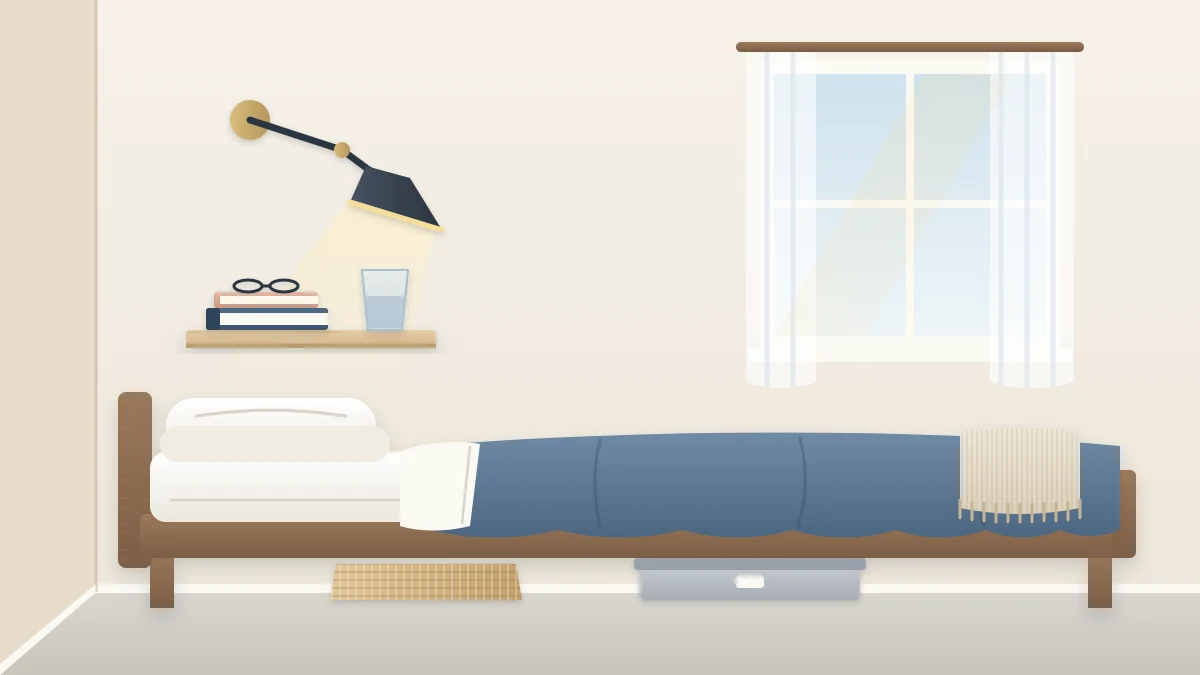
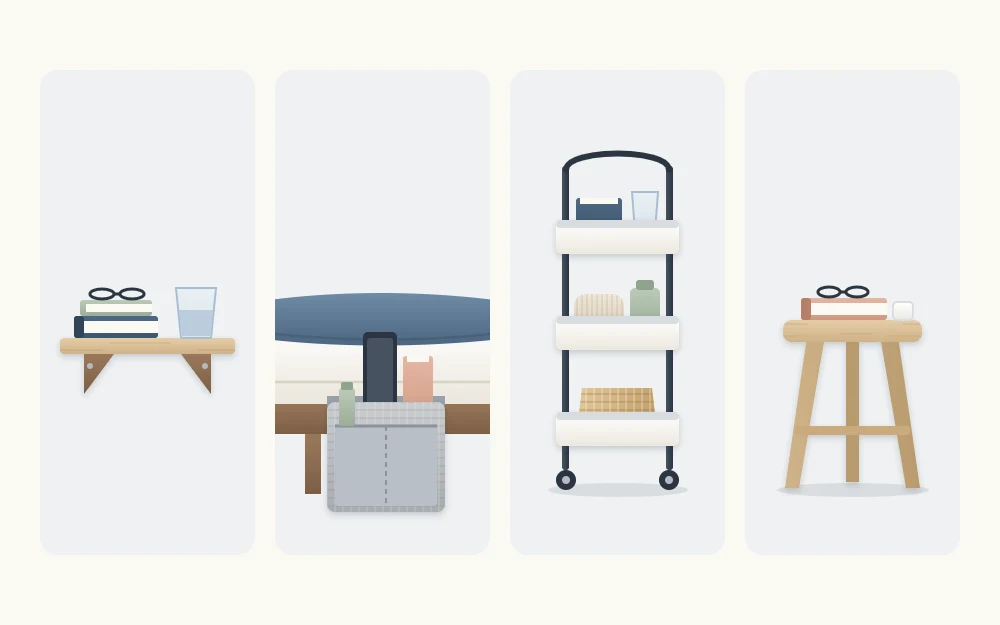
A shelf fixed to the wall beside the pillow gives you a firm, level surface with nothing on the floor. A shallow ledge is enough for a phone, glasses and a paperback, and a slightly deeper shelf takes a glass as well.
The catch is that it has to be fixed properly, and it holds only what it is rated for. Set the height by lying in bed and reaching out: a surface about level with the top of the mattress is easy to use without sitting up.
Good to know
For any wall-mounted piece, use fixings suited to your wall type, follow the product instructions and stay within the limits the product states. If you rent, check the lease before drilling.
A bedside caddy or wall pocket
A fabric caddy is a set of pockets on a flat panel. Some hang from the bed frame, and others have a long flap that slides between the mattress and the base to hold them in place. A wall pocket is the same idea fixed to the wall.
Pockets suit flat, light things: glasses in a case, a book, a notebook, a remote, a pack of tissues. They are no use for a drink, and anything heavy will pull the caddy down. Check that the flap sits flat and that the pockets hang clear of the floor.
A caddy also solves a common shared-bed problem. When one side of the bed is against a wall, the person on that side has no table and no easy way out. A caddy on the far side gives them their own place for glasses and a book.
A headboard with a shelf or cubbies
Some headboards have a shelf along the top or open cubbies at each side. Storage is built into the bed’s own footprint, so the gap beside the bed does not matter at all.
The catch is that it means choosing or replacing a headboard. Things on a top shelf are also behind your head, which makes them harder to reach lying down than something at your side.
A slim rolling cart, a stool or sturdy boxes
If there is some floor beside the bed, just not enough for a table, three simple stand-ins are worth a look.
- A slim rolling cart. Narrow carts with two or three tiers fit gaps a nightstand cannot, and the lower tiers hold the next book or a small basket. The open tiers show everything, so keep them edited.
- A stool. A plain stool with a flat top is a small table with a small footprint. It has no storage underneath, which also means nothing accumulates there.
- A small stack of sturdy boxes. Two or three solid lidded boxes of the same size make a low surface with storage inside. Keep the stack short and steady, and put what you rarely need in the bottom box, since reaching it means unstacking.
Free the surface with a wall or clip-on light
A table lamp often takes up half of a small bedside surface. A wall-mounted reading light, or a clip-on light attached to the headboard or a shelf edge, gives that space back, and it may be the only change you need.
Install and use any light as its manufacturer instructs, and place it where the switch is within reach from the pillow. The cord still needs a tidy route to the outlet. That is covered in the guide to organizing chargers and lamp cords at the bedside, which also explains where a charging phone should and should not sit.
A shelf above the headboard, for light items only
A shallow shelf on the wall above the headboard is tempting because that wall is usually empty. It suits only light items, placed so that nothing can fall onto the bed: a couple of paperbacks lying flat, a small box of tissues, a soft pouch. Keep glasses of water, heavy books and anything breakable off it, and apply the same fixing rules as for any wall shelf.
The options at a glance
| Option | Holds | The catch |
|---|---|---|
| Wall shelf or ledge | Phone, glasses, book, possibly a glass | Needs proper fixing; stated limits apply |
| Caddy or wall pocket | Flat, light items | No drinks, nothing heavy |
| Headboard shelf or cubbies | Books and small items | Means changing the headboard |
| Slim rolling cart | Night items plus a little storage | Open tiers show everything |
| Stool or stacked boxes | A few night items | Small top; boxes must be unstacked to open |
| Wall or clip-on light | Frees the surface you have | Cord still needs a route |
In the tightest rooms a pairing often works best, such as a ledge for the glass and phone with a caddy for the book and glasses. A narrow bedside is usually one symptom of a tight room overall. For the wider picture, including furniture placement and keeping the floor clear, see the guide to organizing a small bedroom.
Frequently asked questions
What can I use instead of a nightstand in a small bedroom?
A narrow wall shelf or ledge, a fabric caddy that hangs at the side of the bed, a headboard with a shelf, a slim rolling cart or a simple stool can all stand in. Measure the gap beside the bed, list the few things you use at night, and choose the smallest option that holds them.
How high should a bedside wall shelf be?
A good starting point is about level with the top of your mattress, so you can reach it lying down. Beds differ in height, so lie in bed and reach out to mark the spot before fixing anything. Follow the product instructions and use fixings suited to your wall type.
What is a bedside caddy good for?
A caddy is a panel of fabric pockets that hangs from the bed frame or is held by a flap at the side of the bed. It suits flat, light items such as a book, a glasses case, a notebook or a remote. It will not hold a drink or anything heavy.