Nightstand Organization: What to Keep Beside the Bed
One rule and three levels for a tidy nightstand: what to keep beside the bed, what to move out, and how to use the top, the drawer and the lower shelf.
The nightstand is the smallest surface in the bedroom and the one used most. It is within reach at the exact moments you are least inclined to put something away: late at night and first thing in the morning. So it collects cups, cords, books and odds and ends faster than anywhere else in the room.
Nightstand organization comes down to one rule and three levels. The rule decides what stays beside the bed. The levels, which are the top, the drawer and the lower shelf, decide where each thing goes.
The rule: only what you use from bed
A nightstand exists so you do not have to get up. Anything you reach for while in bed, or in the first minute after waking, has a claim on it. Everything else is using the space because it was convenient to set down.
The test for any item is short: when did you last use this without leaving the bed? If the answer is “last night” or “most nights,” it stays. If it is “I am not sure,” it belongs to another part of the room.
What stays and what moves out
A realistic bedside list is brief. Yours may differ by an item or two, but it is rarely longer than this:
- A lamp
- The book you are reading now
- Glasses
- A phone or an alarm clock
- A glass or bottle of water
- Tissues
- Lip balm or hand cream
These are the things that commonly move in without belonging, and where they can go instead:
| What moves out | A better home |
|---|---|
| The stack of unread books | A bookshelf; keep one next book on the lower shelf |
| Mail and paperwork | A desk or a paper tray outside the bedroom |
| Cosmetics and toiletries | The bathroom or the dresser |
| Loose change, keys, receipts | A landing spot tray near the door |
| Yesterday’s cups and glasses | The kitchen, each morning |
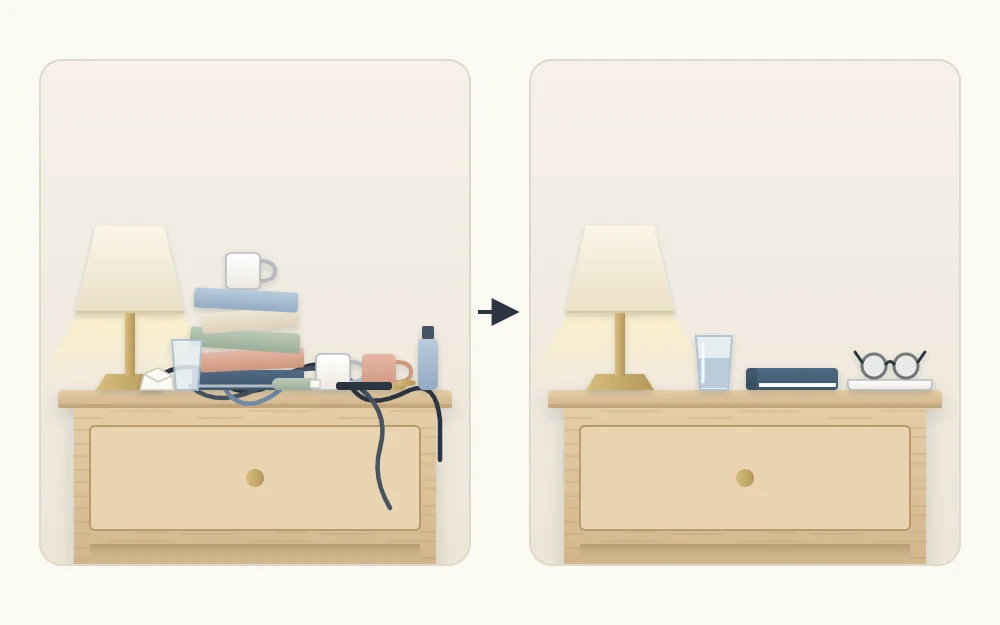
The top: three or four things used every night
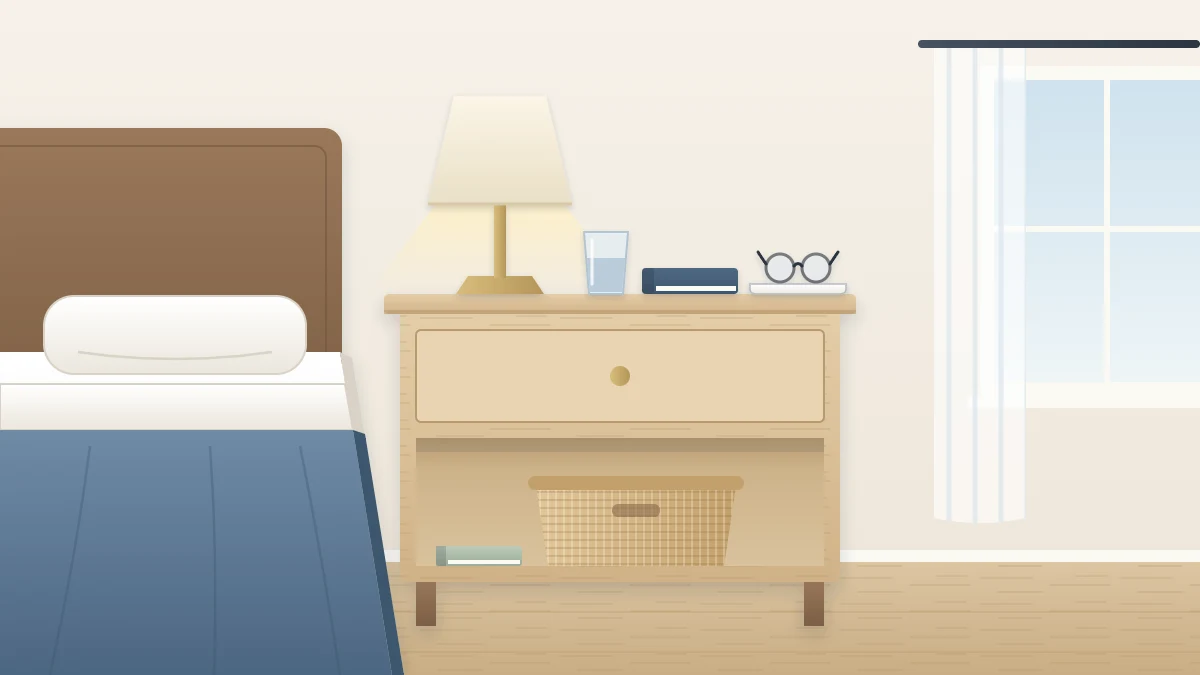
The top is for what you use nightly and nothing more. For most people that is the lamp, the current book, glasses and water, with the phone or clock as a possible fifth.
Arrange them by reach. The lamp goes toward the back, on the side nearer the bed, so you can find its switch without knocking anything over. Water sits where an arm moving in the dark will not catch it, away from the phone and the book.
Small items need an edge. A tray or shallow dish for glasses, lip balm and a watch turns scattered objects into a single group, and it marks a limit: when the tray is full, the top is full.
Tip
Take last night’s glass with you when you leave the room in the morning. One cup going out each day is the whole reason cups never pile up.
The drawer: small things out of sight
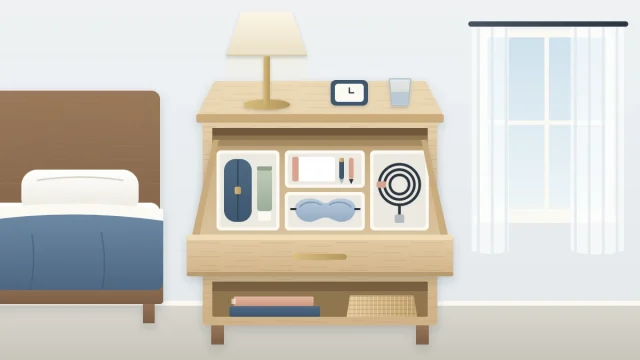
The drawer holds what you want within reach but do not need to look at: tissues, hand cream, a sleep mask, earplugs, a pen and notepad, a spare pair of glasses. Because it is small and close, it turns into a catch-all quickly unless its contents have sections.
A few small boxes or a divided insert are usually enough. The full method, with what to keep and what to clear out, is in the guide to organizing a nightstand drawer.
Good to know
If you keep medicines at the bedside, store them as the label says and out of the reach of children. An unlocked nightstand drawer is within a child’s reach.
The lower shelf: the next book and one basket
If your nightstand has an open shelf below, give it two jobs at most. The first is the next book or magazine, so the top holds only the one you are reading. The second is a small basket for soft or awkward things: a pair of socks, a notebook, a reading light, an e-reader.
The basket matters because an open shelf at floor level gathers loose items and dust. A basket keeps them contained and slides out in one move when you clean. Choose one that fits the shelf with a little clearance; measure the shelf’s width, depth and height first.
Cords and chargers
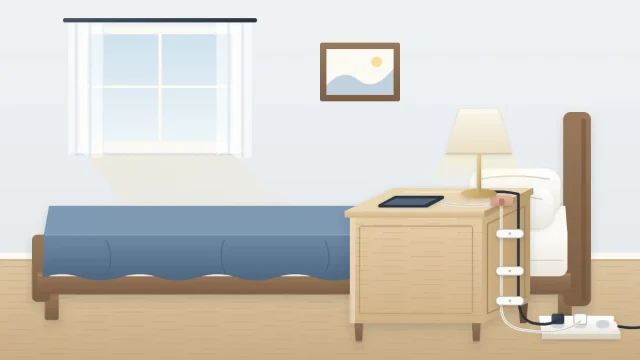
A phone charger and a lamp cord are the minimum beside most beds, and they are often what makes a tidy nightstand still look tangled. The aim is for each cord to take a fixed route to the outlet and for the charging end to stay where you can find it.
Use chargers and power strips as their manufacturers instruct, and do not leave a phone or charger under a pillow or bedding. Routing, clips and what to do when the outlet is in the wrong place are covered in the guide to bedside cable organization.
Choosing or checking a nightstand
Whether you are buying one or judging the one you have, three things affect how well it organizes.
- Height. A top about level with the top of your mattress is the easiest to reach from lying down. Mattress heights vary widely, so measure from the floor to the top of your own mattress instead of relying on a standard figure.
- Storage. Look for at least one drawer or shelf. A bare tabletop has only one level, so everything ends up on view.
- Surface size. It needs room for the lamp base, a book and a glass without stacking. Measure the gap between the bed and the wall or the next piece of furniture before you choose a width.
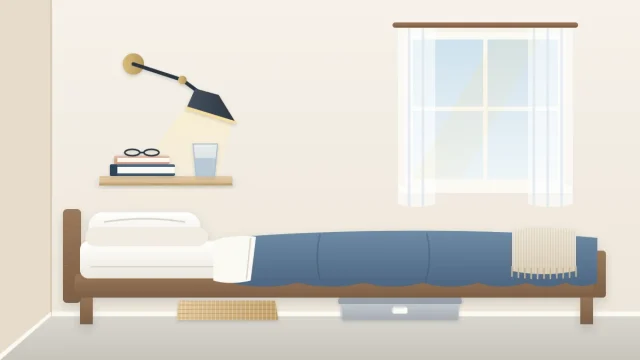
If the space beside your bed is too narrow for a nightstand, or you have none, there are alternatives such as a wall shelf, a bedside pocket or a stool. See these bedside storage ideas for the options and what each suits. For anything mounted on the wall, follow the product instructions and use fixings suited to your wall type.
A one-minute nightly habit
A nightstand this small does not need a weekly session. It needs a few seconds a day. Before you turn off the lamp, put the book on the top or the shelf, glasses in the tray and anything that wandered in during the evening back in its place or by the door to take out in the morning.
If the same stray item keeps appearing, such as a hair tie, a remote or a second book, it has earned a place. Give it a spot in the drawer or the basket and remove something else to make room.
Frequently asked questions
What should you keep on a nightstand?
Only what you use from bed or right after waking. For most people that means a lamp, the book they are reading, glasses, water and a phone or alarm clock, with tissues and lip balm or hand cream in the drawer. Anything not used from bed belongs elsewhere in the room.
How tall should a nightstand be?
A top that sits about level with the top of your mattress is usually the easiest to reach while lying down. Beds and mattresses differ a lot in height, so measure from the floor to the top of your own mattress and compare that with the nightstand before buying.
How do I stop my nightstand from getting cluttered again?
Give the small items a tray so there is a visible limit, take the used glass out each morning, and spend a few seconds before turning off the lamp returning anything that drifted in. If one stray item keeps coming back, give it a fixed spot in the drawer.